
8 Unique Museum Experiences in Amsterdam at a Glance
| Museum | Distinctive experience | Particularly suited to |
| Moco Museum Amsterdam | Digital and contemporary art inside a historic townhouse | Contemporary art lovers, couples, curious visitors |
| NEMO Science Museum | Hands-on experiments and scientific discovery | Families, children, interactive learners |
| ARTIS-Micropia | Exploring the invisible world of microorganisms | Science enthusiasts, curious adults, older children |
| STRAAT Museum | Monumental street art inside a former industrial warehouse | Street art lovers, visual culture enthusiasts |
| Museum Ons’ Lieve Heer op Solder | Discovering a hidden church inside a 17th-century house | History lovers, architecture enthusiasts |
| Rembrandt House Museum | Experiencing an artist’s former home and working techniques | Art history lovers, creative visitors, families |
| Eye Filmmuseum | Experimenting with moving images and film technology | Film enthusiasts, families, creative visitors |
| KattenKabinet | Exploring artistic representations of cats | Cat lovers, small-museum enthusiasts |

1. Moco Museum Amsterdam: Digital Art Inside a Historic Townhouse
Imagine entering a historic Amsterdam townhouse and discovering artworks that question the boundary between the physical and digital worlds.
The museum presents modern, contemporary, digital, immersive and street art within Villa Alsberg, a historic building near Museumplein. Its intimate rooms create an unexpected setting for contemporary artistic ideas.
What makes the experience different?
Moco connects historic architecture with artworks that explore modern visual culture, digital creativity and the relationship between reality and imagination.
Its October 2026 collection inventory confirms several digital artworks by Andrés Reisinger on display, including FLY (2024), Take Over Elastic (2024), Hortensia Chair (2021) and Fire (Chair) (2021).
Reisinger is known for combining digital design, architectural spaces and objects that seem to exist somewhere between the familiar and the impossible.
Hortensia Chair offers a particularly interesting example.
Inspired by hydrangea flowers, the design first appeared as a digital creation before being developed into a physical chair. Its journey from screen to tangible object invites visitors to reconsider the relationship between art, design and technology.
What will you actually see or do?
Explore a collection that brings contemporary art into conversation with digital practices.
Alongside Reisinger’s work, the October 2026 inventory confirms Everydays – Raw (2021) by Beeple, Extrusion (2020) by PAK and Among the Sky, Flow and Sun (all 2023) by Six N. Five as on show.
These works demonstrate different approaches to digital image-making and imagined environments.
Digital art is not necessarily interactive. Some works invite participation, while others create an engaging visual experience without requiring visitors to touch or control anything. Moco’s current inventory confirms the artworks on display, but does not establish that each work is physically interactive.
Who is it best for?
Moco is particularly suited to visitors interested in contemporary culture, digital creativity and art that encourages new ways of seeing familiar ideas.
Its combination of historic surroundings and contemporary expression makes it an interesting choice for couples, friends and visitors exploring Amsterdam’s cultural landscape.
2. NEMO Science Museum: Discover Science by Experimenting
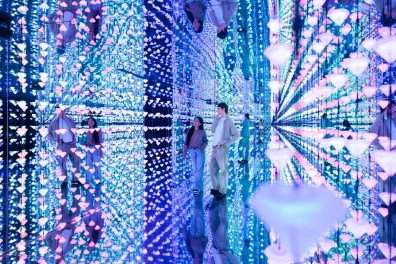
At NEMO Science Museum, visitors don’t just learn about scientific ideas. They investigate them.
The museum turns everyday phenomena into questions you can explore through experiments, demonstrations and interactive exhibits.
What makes the experience different?
Participation is central to the visit.
Instead of relying entirely on displays and explanations, NEMO encourages visitors to test ideas and discover how things work.
Its exhibition floors explore subjects including light, sound, electricity, technology, the human body and the universe.
What will you actually see or do?
Explore hands-on exhibits and activities that connect scientific concepts to everyday experiences.
At the Maker Space, visitors can experiment with materials and creative problem-solving. The Laboratory offers opportunities to investigate scientific questions through practical experiments.
Some activities have age recommendations or scheduled sessions, so check the current programme when planning your visit.
Who is it best for?
NEMO is particularly well suited to families with children and visitors who enjoy learning through participation.
For anyone searching for interactive museums in Amsterdam, its defining feature is straightforward: visitors are encouraged to discover science by doing.
3. ARTIS-Micropia: Explore a World You Cannot Normally See
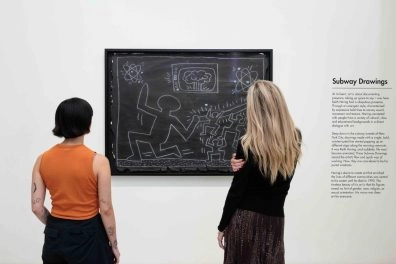
How much of the world around us remains invisible?
At ARTIS-Micropia, that question becomes the starting point for an unusual museum experience.
The museum focuses on microorganisms, the tiny forms of life that exist around us, on us and within our bodies.
What makes the experience different?
Micropia makes the microscopic world its central subject.
Rather than presenting familiar historical objects or artworks, it explores organisms that influence everyday life but are usually impossible to see without scientific equipment.
The experience changes how visitors think about the relationship between humans and the natural world.
What will you actually see or do?
Explore displays and interactive learning experiences that reveal the diversity of microorganisms and their role in life on Earth.
The museum combines scientific information with visual presentations designed to make an otherwise invisible subject easier to understand.
Who is it best for?
Micropia is particularly interesting for curious adults, science enthusiasts and families with older children.
Its distinctive quality lies in revealing a world that is constantly present but rarely noticed.
4. STRAAT Museum: Experience Street Art at Monumental Scale
Street art is often associated with public walls, unexpected locations and the energy of urban life.
STRAAT Museum brings that visual language into a former industrial warehouse at Amsterdam’s NDSM Wharf.
What makes the experience different?
Scale transforms the encounter.
Many artworks are comparable in size to outdoor murals, giving visitors an opportunity to appreciate street art beyond the smaller formats commonly found in galleries.
The industrial setting also connects the artworks to the urban environments from which street-art practices emerged.
What will you actually see or do?
Walk through a large former warehouse filled with street art and graffiti by artists from different backgrounds.
Discover the techniques, stories and visual languages behind works that might otherwise appear on buildings or public walls.
Rather than promising hands-on participation, STRAAT offers a different relationship with art through its scale, architecture and connection to urban culture.
Who is it best for?
STRAAT is particularly suited to street art enthusiasts, photography lovers and visitors interested in contemporary visual culture.
Its defining experience is seeing art associated with public spaces presented at architectural scale.
5. Museum Ons’ Lieve Heer op Solder: Discover a Hidden Church
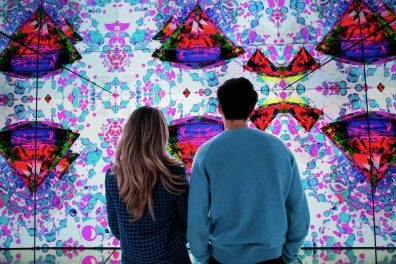
From the street, Museum Ons’ Lieve Heer op Solder looks like a historic Amsterdam canal house.
Inside, the experience gradually reveals something unexpected.
Visitors move through preserved domestic rooms, narrow corridors and staircases before reaching a complete church concealed in the attic.
What makes the experience different?
The building itself tells the story.
The attic church was inaugurated in 1663, during a period when Catholics in Amsterdam faced restrictions on practising their religion publicly.
Instead of learning about this history only through objects and written explanations, visitors encounter it through the spaces where people once lived and worshipped.
What will you actually see or do?
Explore historic living quarters, kitchens and the attic church.
The journey through the building reveals how architecture, domestic life and religious history intersect.
The museum offers a particularly intimate way to understand Amsterdam’s past.
Who is it best for?
This museum suits history lovers, architecture enthusiasts and visitors who enjoy exploring smaller historic spaces.
Accessibility note: The historic house and church involve numerous narrow, steep stairs and are not wheelchair-accessible. The museum’s entrance building has accessible facilities, and visitors with mobility requirements should consult the museum’s current arrangements before visiting.
6. Rembrandt House Museum: Discover How an Artist Worked
Seeing a painting is one experience. Understanding how it was made is another.
At the Rembrandt House Museum, visitors enter the former home and workplace of Rembrandt van Rijn.
The museum connects the artist’s creative practice with the spaces where he lived and worked.
What makes the experience different?
The experience combines historic surroundings with demonstrations of traditional artistic techniques.
Visitors can explore Rembrandt’s former home while learning about the materials and processes behind his paintings and prints.
What will you actually see or do?
Discover the artist’s historic studio and learn how paint was prepared using pigments and oils.
The museum also presents demonstrations explaining etching, the printmaking technique Rembrandt used extensively.
Paint-making and etching demonstrations form part of the museum’s regular programme, while additional hands-on workshops may be offered on selected dates.
Visitors interested in a particular activity should check the current schedule before travelling.
Who is it best for?
The Rembrandt House Museum is particularly suited to art history enthusiasts, creative visitors and families interested in how artworks are made.
Its distinctive experience is the opportunity to connect an artist’s work with the techniques and surroundings of his everyday life.
7. Eye Filmmuseum: Become Part of the Moving Image
Film is usually something we sit down and watch.
At Eye Filmmuseum, it can also become something we explore, experiment with and create.
Located across the IJ from Amsterdam Central Station, Eye brings together film history, cinema, visual art and interactive experiences.
What makes the experience different?
Its permanent exhibition, What is Film?, introduces visitors to the development of moving images through historic equipment, film fragments and hands-on installations.
The experience reveals how cinema works, from early moving-image devices to contemporary filmmaking.
What will you actually see or do?
Explore film equipment, discover how early cameras worked and experiment with visual storytelling.
The permanent exhibition includes opportunities to create a flipbook or animated film.
These activities help explain how sequences of still images create the illusion of movement.
Certain activities, such as obtaining a printed flipbook, may involve an additional charge.
Who is it best for?
Eye is particularly suited to film enthusiasts, creative visitors and families interested in how moving images are made.
Its combination of film history and participation makes it a strong choice for visitors seeking an interactive cultural experience.

8. KattenKabinet: Explore Art Through an Unexpected Subject
A museum doesn’t need advanced technology or an enormous collection to offer a distinctive experience.
Sometimes, a single subject changes the way visitors explore art.
At KattenKabinet, that subject is the cat.
What makes the experience different?
The museum brings together artistic representations of cats, using a familiar animal as the connecting theme.
Rather than presenting a conventional chronological history of art, the collection encourages visitors to consider how different artists have interpreted the same subject.
What will you actually see or do?
Explore cat-inspired artworks and discover the role cats have played in artistic expression.
The museum’s focused subject creates a different way of looking at art, encouraging visitors to notice variations in style, character and interpretation.
Who is it best for?
KattenKabinet is especially suited to cat lovers, visitors interested in smaller museums and people who appreciate collections built around a specific idea.
Its appeal lies in its intimate scale and focused artistic subject rather than interactive technology.
Which Interactive Museums Are Good on a Rainy Day in Amsterdam?
NEMO Science Museum, ARTIS-Micropia and Eye Filmmuseum are good options for interactive indoor activities on a rainy day in Amsterdam. Moco Museum Amsterdam offers an indoor experience focused on modern, contemporary and digital art, although not every digital artwork is interactive.
Rainy weather can be an opportunity to explore Amsterdam through a different kind of cultural experience.
If you want to participate rather than simply observe, NEMO offers hands-on scientific experiments, Micropia introduces interactive learning about microorganisms, and Eye invites visitors to explore moving-image technology.
For a more reflective indoor visit, Moco Museum Amsterdam connects digital creativity with contemporary artistic ideas. The Rembrandt House Museum offers another approach, allowing visitors to learn about traditional artistic techniques through demonstrations.
The distinction matters.
An interactive museum experience asks visitors to participate, experiment or make choices.
An immersive art experience changes how visitors perceive or encounter an artwork, sometimes through scale, sound, digital imagery or spatial design.
A museum can offer one, both or neither. Digital art is not automatically interactive.
For a broader selection of indoor activities, explore our https://www.mocomuseum.com/amsterdam/things-to-do-in-amsterdam/
How to Choose the Right Museum Experience in Amsterdam
The best choice depends on how you want to engage with what you see.
If you enjoy experimenting: Choose NEMO Science Museum for hands-on learning or ARTIS-Micropia for a scientific encounter with the microscopic world.
If you love visual culture: Explore Moco Museum Amsterdam for contemporary and digital art, STRAAT for large-scale street art or Eye Filmmuseum for moving-image experiences.
If you prefer history experienced through real places: Visit Museum Ons’ Lieve Heer op Solder or the Rembrandt House Museum.
If you enjoy intimate, focused collections: KattenKabinet offers an unusual perspective on artistic expression through a single familiar subject.
Ultimately, unique museum experiences aren’t defined by how unusual a museum sounds.
They’re defined by what happens when you enter, and how differently you see the world when you leave.
Visitor Information: Planning Your Museum Visit
These eight museums are located across different areas of Amsterdam, from Museumplein and the historic city centre to Amsterdam Noord.
They are presented as a selection of distinctive experiences rather than a single walking itinerary.
Opening hours, exhibitions, demonstrations, activities and accessibility arrangements can change. Check each museum’s official website before travelling, particularly if you’re planning your visit around a specific workshop or installation.
Visiting Moco Museum Amsterdam
Location: Honthorststraat 20, near Museumplein, Amsterdam.
Opening hours, October 9 – November 8, 2026: Daily, 9:00 AM–8:00 PM.
All exhibitions are available during evening opening hours.
For the fullest experience, plan to arrive at least 45 minutes before the final available entry time slot. Visitors who want more time to explore should select an earlier slot.
The museum’s October 2026 inventory confirms digital artworks by Andrés Reisinger, Beeple, PAK and Six N. Five as on show. Displays may change, so check current exhibition information before visiting.
Experience Art Differently at Moco Museum Amsterdam
A distinctive museum experience can change more than what you see. It can change how you look.
At Moco Museum Amsterdam, the contrast between a historic townhouse and contemporary artistic expression creates room for unexpected connections.
Digital artworks challenge the boundaries between imagination and reality. Modern and contemporary art introduces new perspectives on familiar imagery, society and culture.
Moco Museum is an independent modern and contemporary art museum with locations in Amsterdam, Barcelona and London. Through modern, contemporary, digital, immersive and street art, Moco creates accessible experiences that encourage curiosity, reflection and emotional connection.
Whether you’re exploring Amsterdam for the first time or rediscovering your own city, Moco invites you to encounter art from a different perspective.
Discover a different way to experience art. Book now!
Frequently Asked Questions
What are some unique museum experiences in Amsterdam?
Unique museum experiences in Amsterdam include digital art at Moco Museum, interactive science at NEMO, microorganisms at ARTIS-Micropia, monumental street art at STRAAT, a hidden attic church at Museum Ons’ Lieve Heer op Solder, artistic demonstrations at the Rembrandt House Museum, interactive film at Eye and cat-inspired art at KattenKabinet.
Which museums in Amsterdam are interactive?
NEMO Science Museum, ARTIS-Micropia and Eye Filmmuseum offer interactive experiences. The Rembrandt House Museum also presents artistic demonstrations and selected hands-on activities. The level and type of participation vary by museum and programme.
Are there immersive art museums in Amsterdam?
Yes. Moco Museum Amsterdam presents digital and immersive art alongside modern and contemporary works. Its October 2026 collection includes digital artworks by Andrés Reisinger, Beeple, PAK and Six N. Five. Individual works differ in how visitors experience them.
Which Amsterdam museums are good for families with children?
NEMO Science Museum is particularly suited to hands-on family learning. Eye Filmmuseum offers interactive film experiences, while the Rembrandt House Museum combines historic surroundings with demonstrations and family-oriented activities. Check current age guidance and programme availability before visiting.
Which interactive museums are good on a rainy day in Amsterdam?
NEMO Science Museum, ARTIS-Micropia and Eye Filmmuseum are particularly relevant for interactive indoor experiences. Moco Museum Amsterdam and the Rembrandt House Museum are additional indoor cultural options with different approaches to art.
Is Moco Museum Amsterdam interactive?
Moco Museum Amsterdam presents digital and immersive artworks, but digital art is not automatically interactive. Its October 2026 collection includes works exploring digital design, imagined environments and visual perception. Visitors should not assume that every artwork responds to touch or movement.