What Is the Difference Between Rijksmuseum and Moco Museum Amsterdam?
The main difference between Rijksmuseum and Moco Museum Amsterdam is their focus. Rijksmuseum presents a broad journey through Dutch art and history across centuries, including celebrated Dutch Masters and 20th century art. Moco Museum Amsterdam centres its experience on modern, contemporary, street, digital and immersive art. Neither replaces the other. They offer different perspectives on art and culture.
The most useful question, then, is not necessarily which museum is better. It is what kind of art experience you want.
Choose Rijksmuseum if Dutch Masters, Dutch history and a collection spanning centuries are your priorities. Choose Moco Museum Amsterdam if you are most interested in modern and contemporary visual culture, street art and immersive experiences. Visit both if you want to see how dramatically the language and role of art can change across time.
What Is the Difference Between Rijksmuseum and Moco Museum Amsterdam?
The main difference between Rijksmuseum and Moco Museum Amsterdam is their focus. Rijksmuseum presents a broad journey through Dutch art and history across centuries, including celebrated Dutch Masters and 20th century art. Moco Museum Amsterdam centres its experience on modern, contemporary, street, digital and immersive art. Neither replaces the other. They offer different perspectives on art and culture.
The most useful question, then, is not necessarily which museum is better. It is what kind of art experience you want.
Choose Rijksmuseum if Dutch Masters, Dutch history and a collection spanning centuries are your priorities. Choose Moco Museum Amsterdam if you are most interested in modern and contemporary visual culture, street art and immersive experiences. Visit both if you want to see how dramatically the language and role of art can change across time.
| Rijksmuseum | Moco Museum Amsterdam | |
|---|---|---|
| Main focus | Dutch art and history across centuries | Modern, contemporary, street, digital and immersive art |
| Recognisable artists | Rembrandt, Vermeer and other major figures in Dutch and European art | Banksy, Warhol, Basquiat, Haring, Kusama and other modern and contemporary voices |
| Experience | Large national collection with broad historical scope | Focused modern and contemporary art experience |
| Best suited to | Dutch Masters, art history and historical context | Modern and contemporary culture, street art, digital and immersive experiences |
| Location | Museumplein | Museumplein |
The most useful question, then, is not necessarily which museum is better. It is what kind of art experience you want.
Choose Rijksmuseum if Dutch Masters, Dutch history and a collection spanning centuries are your priorities. Choose Moco Museum Amsterdam if you are most interested in modern and contemporary visual culture, street art and immersive experiences. Visit both if you want to see how dramatically the language and role of art can change across time.
Start with the Dutch Masters at Rijksmuseum
To understand why Rijksmuseum matters to Amsterdam, begin with its extraordinary historical scope.
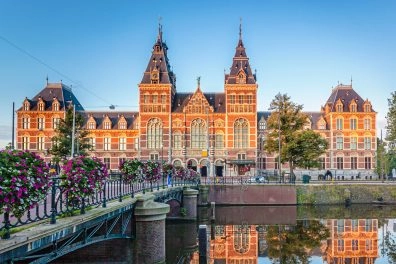
Rijksmuseum tells the story of centuries of Dutch art and history. Its collection is organised across periods from the Middle Ages and Renaissance through the 17th, 18th and 19th centuries and into the 20th century.
For many visitors, the Dutch Masters form the emotional centre of the experience.
The term “Dutch Masters” commonly refers to major artists associated with the extraordinary flourishing of Dutch art during the 17th century. At Rijksmuseum, the Gallery of Honour and Night Watch Gallery bring visitors close to works associated with some of the defining names of this period.
Rembrandt’s The Night Watch and works by Johannes Vermeer, including The Milkmaid and The Little Street, are identified by Rijksmuseum within this part of the museum. Its current visitor map places the 1600 to 1650 and 1650 to 1700 collections on the second floor.
Explore the Rijksmuseum Gallery of Honour
This is more than an encounter with famous names. Look closely and a society begins to emerge through portraiture, domestic life, wealth, trade, status, faith and everyday experience.
The distance between that world and our own is part of what makes looking interesting.
Rijksmuseum’s Story Does Not End with the Dutch Masters
There is an important point to make before crossing Museumplein.
The Rijksmuseum is not simply a museum of 17th century Dutch painting.
Its chronological scope continues through the 18th and 19th centuries and into the 20th century. The current museum map includes periods covering 1700 to 1800, 1800 to 1900, 1900 to 1950 and 1950 to 2000. Vincent van Gogh is identified within the 19th century collection, while the third floor contains 20th century art divided between 1900 to 1950 and 1950 to 2000. The map identifies Karel Appel, Gerrit Rietveld and Constant on this floor.
That overlap matters.
The transition from Rijksmuseum to Moco Museum Amsterdam should not be understood as old art ending and modern art suddenly beginning. Art history does not work that neatly.
Instead, think of the contrast as a change in emphasis.
Rijksmuseum provides a broad historical journey. Moco Museum Amsterdam concentrates much more strongly on modern and contemporary visual culture.
That distinction makes visiting both more interesting, not less.
Continue into Modern Masters at Moco Museum Amsterdam
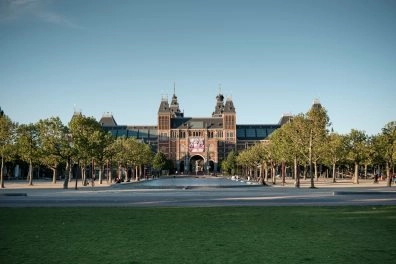
Cross Museumplein and the visual language changes.
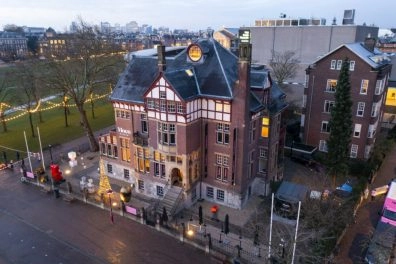
Moco Museum Amsterdam is an independent modern and contemporary art museum presenting modern, contemporary, street, digital and immersive art. The museum opened in Amsterdam in 2016 and brings globally recognised artists together with emerging voices in a historic building that once served as a private residence.
Its Modern Masters exhibition brings together influential figures including Andy Warhol, Jean Michel Basquiat, Keith Haring and Yayoi Kusama.
These artists do not belong to a single movement, and “Modern Masters” should not be read as an art historical category that makes them equivalent. Their practices, backgrounds and concerns are distinct.
What connects the experience is the shift towards some of the forces that transformed visual culture during the 20th century and beyond.
Pop culture enters the gallery. Advertising and consumer imagery become artistic material. Street culture challenges assumptions about where art belongs. Questions of race, identity, celebrity, power and protest move into view.
For visitors looking for a modern art museum in Amsterdam, Moco offers a concentrated encounter with these changing visual languages alongside contemporary, digital and immersive work.
From Portraits and Patrons to Pop Culture and Protest
Walk through both museums and one thing becomes clear: art keeps changing because society keeps changing.
The subjects of 17th century Dutch art emerged within a world shaped by different systems of patronage, status, commerce, religion and social life. Centuries later, artists encountered mass media, advertising, celebrity culture, political protest and the growing influence of images reproduced at enormous scale.
Andy Warhol turned the visual language of consumer goods and celebrity into art that continues to shape conversations about fame and consumption.
Jean Michel Basquiat developed a dense visual language of words, symbols and figures through which questions of identity, race, history and power repeatedly surface.
Keith Haring brought an instantly recognisable language of lines and figures into public space while engaging with social and political issues.
Banksy uses the visual language and methods associated with street art to address subjects including authority, conflict, inequality and consumer culture.
These are not modern equivalents of Rembrandt or Vermeer. Drawing direct lines between individual artists across centuries can flatten what makes each period distinctive.
The more interesting connection is broader.
Artists keep looking at the societies around them. What changes is the world they see, the materials available to them, the audiences they address and the visual language they choose.
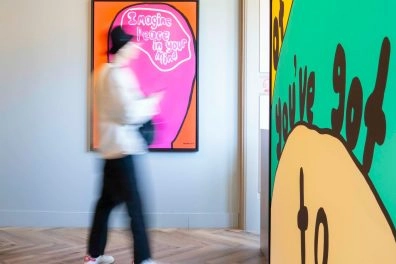
What Connects Dutch Masters and Modern Masters?
Artists Respond to Their Own Time
Centuries separate the artists encountered across these two museums, but some human questions persist.
Art can reveal what a society values, fears, celebrates or questions.
Status and wealth appear differently across centuries. So do identity and power. The symbols change. The social structures change. The methods change. But artists continue to observe the world around them and decide what deserves attention.
Artists Change How We See
A masterpiece does more than document a moment.
Artists make choices about scale, colour, composition, gesture, material and perspective. Those choices can alter what viewers notice about a familiar face, an ordinary object or a social reality.
That remains true whether the work emerged from a 17th century studio, the visual culture of postwar America or the street.
Context Changes Meaning
Looking at art from different periods close together can make those differences easier to recognise.
After spending time with historical art, the use of advertising, graffiti, digital technology or mass produced imagery in later art can feel more pronounced. Move in the opposite direction and contemporary questions about identity, status and representation may make you look again at how those themes appeared centuries earlier.
Neither experience needs to explain the other.
The value lies in the contrast.
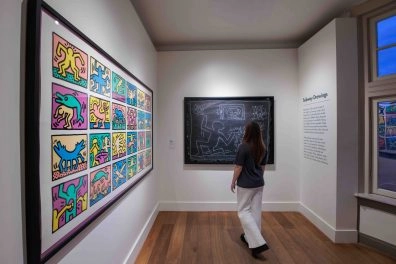
Where Can You See Banksy in Amsterdam?
Visitors can see Banksy at Moco Museum Amsterdam. Banksy forms part of Moco’s wider focus on modern, contemporary and street art, alongside artists including Warhol, Basquiat, Haring and Kusama.
For visitors whose interest in Amsterdam museums begins with contemporary culture or street art, Banksy offers another entry point into Museumplein.
But the contrast with the Rijksmuseum also reveals how much the spaces in which art is created have changed. Art does not only emerge from studios, academies or traditional systems of patronage. It can enter public space, respond directly to politics and culture, and challenge the boundary between an artwork and its surroundings.
Visitors interested specifically in where to experience Banksy can explore the Banksy museum Amsterdam experience at Moco.
From the Canvas to Digital and Immersive Art
The journey across Museumplein can extend beyond changes in subject matter.
The way art is experienced has changed too.
Paintings and physical objects ask us to stand before them. Contemporary digital practices can introduce movement, technology, changing environments and immersive space.
At Moco Museum Amsterdam, modern and contemporary works sit alongside digital and immersive art. These experiences expand the comparison beyond Dutch Masters and Modern Masters into another question: what can an artwork be?
For visitors with limited knowledge of art history, this can make the journey particularly tangible. You do not need to memorise movements or dates. Simply notice what changes as you move through different periods.
Who is represented?
What materials are being used?
Who was the original audience?
What does the artist seem to be asking you to notice?
The answers rarely stay the same.
Can You Visit the Rijksmuseum and Moco Museum in One Day?
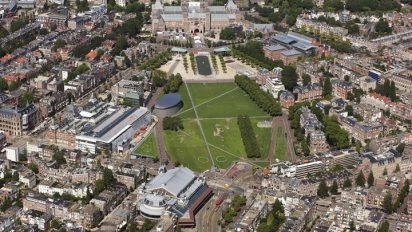
Yes. Rijksmuseum and Moco Museum Amsterdam are both located around Museumplein, making it practical to visit both on the same day. The combination works particularly well for visitors who want to experience Dutch art and history alongside modern, contemporary, street, digital and immersive art.
Their proximity is one of the strongest reasons to consider the museums together.
You can move from the broad historical scope of Rijksmuseum to the concentrated modern and contemporary perspective of Moco without turning the day into a journey across Amsterdam.
This makes the combination especially relevant for visitors exploring Amsterdam for the first time, city trips focused on art, visitors with broad artistic interests and people who want historical and contemporary perspectives within the same cultural area.
If you want to explore beyond the two museums, discover more things to do in Amsterdam and build the rest of your day around the city.
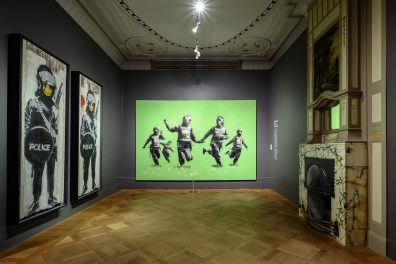
Rijksmuseum or Moco Museum: Which Should You Choose?
There is no universal answer. The better choice depends on what you want from your museum visit.
Choose the Rijksmuseum if…
Your priority is Dutch art and history, celebrated Dutch Masters and a broad collection spanning centuries.
Rijksmuseum is the stronger fit when historical context is central to what you want to understand. Its scale allows visitors to move across periods rather than concentrating on one chapter of art history.
Choose Moco Museum Amsterdam if…
Your priority is modern and contemporary visual culture.
Moco Museum Amsterdam is the stronger fit if you want to encounter artists such as Banksy, Warhol, Basquiat, Haring and Kusama alongside street, digital and immersive art.
The experience is more concentrated around modern and contemporary culture rather than a broad national art historical collection.
Visit both if…
You are curious about what changes when substantially different artistic periods and perspectives are placed within the same day.
Rijksmuseum and Moco Museum Amsterdam are not substitutes for one another. Rijksmuseum offers broad historical context and celebrated Dutch Masters, while Moco Museum Amsterdam focuses on modern, contemporary, street, digital and immersive art. Visiting both gives art lovers contrasting perspectives within the Museumplein area.
From Dutch Masters to Modern Masters
Art does not stop at a museum door. It does not move forward in one perfectly straight line either.
That is what makes Museumplein such an interesting place to look.
At the Rijksmuseum, centuries of Dutch art and history reveal changing ideas about society, identity, status, everyday life and artistic expression. At Moco Museum Amsterdam, another set of visual languages comes into focus through modern and contemporary art, street culture, digital practices and immersive environments.
One museum does not complete the other.
Instead, each can change what you notice next.
After Rembrandt and Vermeer, Warhol’s consumer imagery may feel even more striking. After Basquiat, Haring or Banksy, questions of identity, power and public life may follow you back into historical galleries in unexpected ways.
The story continues because artists continue looking at their world.
Moco Museum is an independent modern and contemporary art museum with locations in Amsterdam, Barcelona and London, presenting modern, contemporary, digital, immersive and street art through accessible and emotionally engaging experiences.
If the Rijksmuseum gives you centuries of context, Moco offers another lens on how artists continue to respond to culture now.
Continue your art journey at Moco Museum Amsterdam.
Rijksmuseum and Moco Museum Amsterdam FAQ
Is Moco Museum near Rijksmuseum?
Yes. Moco Museum Amsterdam and Rijksmuseum are both located around Museumplein in Amsterdam. Their proximity makes them practical to combine for visitors who want to experience different periods and perspectives within Amsterdam’s art landscape.
Which museum is best for Dutch Masters in Amsterdam?
Rijksmuseum is the clear choice for visitors whose priority is the Dutch Masters. Its collection includes major 17th century Dutch artists such as Rembrandt and Vermeer within a much broader presentation of Dutch art and history.
Which Amsterdam museums show modern and contemporary art?
Amsterdam has several museums that present modern and contemporary art from different perspectives. Moco Museum Amsterdam focuses on modern, contemporary, street, digital and immersive art, with artists including Banksy, Andy Warhol, Jean Michel Basquiat, Keith Haring and Yayoi Kusama. The wider Museumplein area also includes Stedelijk Museum Amsterdam, whose collection and programme offer another perspective on modern and contemporary art.
What is the difference between Dutch Masters and Modern Masters?
“Dutch Masters” commonly refers to major artists associated with the flourishing of Dutch art in the 17th century. At Moco Museum Amsterdam, “Modern Masters” is the name of an exhibition bringing together influential artists associated with modern visual culture. The terms describe different contexts and should not be understood as equivalent art historical movements.
What museums are on Museumplein?
Museumplein is Amsterdam’s major museum district and includes Rijksmuseum, Moco Museum Amsterdam, the Van Gogh Museum and Stedelijk Museum Amsterdam. These institutions offer substantially different collections and experiences, making Museumplein useful for visitors who want to explore multiple perspectives on art and culture in one area.