
1. Who is Banksy?
Banksy is an anonymous street artist whose identity has never been officially confirmed.
Banksy is a contemporary street artist known for satirical, political, and socially engaged artworks created using stencil techniques.
Rather than revealing himself, Banksy lets the work speak. His art critiques power, consumerism, war, and society, often with humour that feels immediate and disarming.
2. Why does Banksy remain anonymous?
Banksy’s anonymity is not a mystery to solve. It is part of the work itself.
Banksy remains anonymous to keep the focus on the message of the artwork rather than the identity of the artist.
By staying unknown, Banksy removes distraction. There is no biography to follow, no face to interpret. What remains is the image, the message, and the moment it appears.
This choice also reflects the origins of street art. A practice often created without permission, in public space, where visibility and invisibility exist side by side.
In this way, anonymity becomes more than protection. It becomes intention.
3. When was Banksy born?
Banksy’s exact birth date is unknown.
However, based on reports, he is believed to have been born around 1974 in Bristol, England.
Banksy is believed to have been born in Bristol around 1974, although his identity and exact birthdate remain unconfirmed.
4. How did Banksy become famous?
Banksy became famous through a combination of visibility, timing, and message.
Banksy became famous through his distinctive stencil graffiti, political themes, and the viral spread of his artworks in public spaces.
His works appeared in cities at the right moment, when street art began entering mainstream culture. At the same time, his imagery was instantly recognisable. Simple, direct, and often humorous.
But it wasn’t just the visuals. It was how the work moved.
Banksy’s work travels. It is photographed, shared, debated. What begins on a wall becomes part of a global conversation.
Fame, in this case, follows the message.
5. Where does Banksy come from?
Banksy is widely associated with Bristol in the UK.
The city’s underground scene in the 1990s shaped his early work, particularly its graffiti culture and political energy. From there, his work spread globally.
6. How does Banksy make his art?
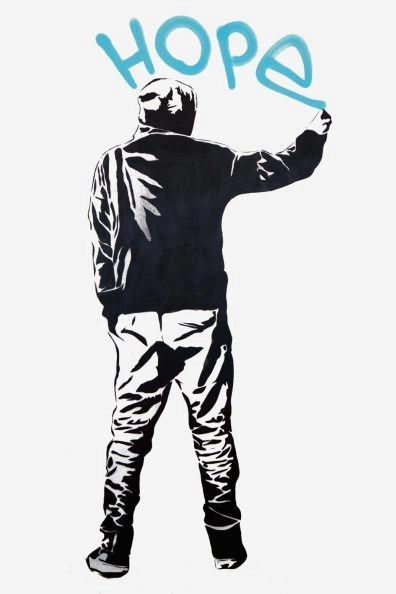
Banksy is known for using stencil techniques.
Banksy creates his street art using stencil techniques, enabling fast execution in public spaces.
This allows him to work quickly, often placing artworks in public spaces without being identified. While the technique is simple, the impact is not. Each image combines visual clarity with strong conceptual meaning.
7. What is Banksy’s art about?
Banksy’s street art often explores:
- Politics and power
- War and conflict
- Consumer culture
- Surveillance
- Human behaviour
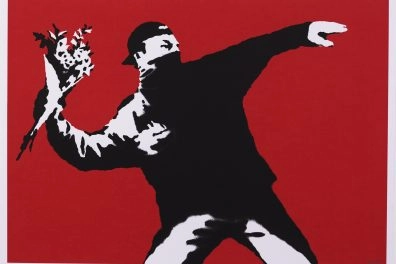
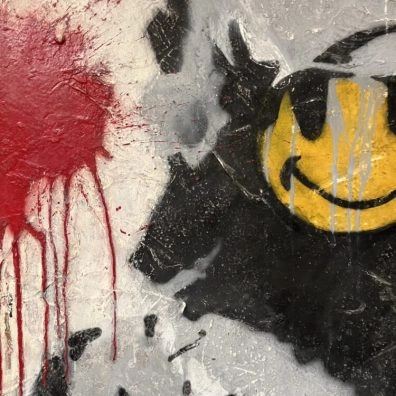
His imagery is direct. A girl reaching for a balloon. A protester throwing flowers. A smiling policeman. Symbols that are easy to recognise, yet difficult to ignore.
8. Is Banksy still active?
Yes, Banksy is still active.
Banksy is still an active artist, regularly creating new works in public spaces worldwide.
New works continue to appear, often responding to current events. His presence remains unpredictable. And that unpredictability is part of the experience.
9. Where can you see Banksy’s art?
Banksy’s street art exists globally, but many authenticated works are also exhibited in museums.
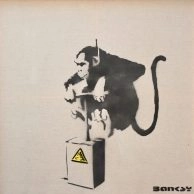
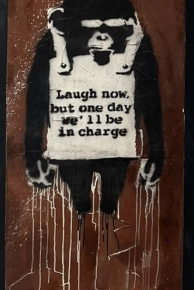
Authenticated Banksy artworks, verified by Pest Control, can be seen in curated exhibitions such as the unauthorised ‘Laugh Now’ exhibition at Moco Museum Amsterdam.
Banksy’s work can be experienced both on the street and in curated spaces like Moco Museum Amsterdam, where context shifts how the work is seen.
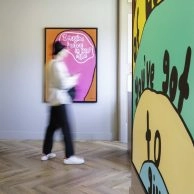
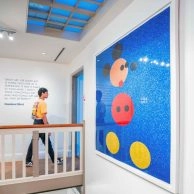
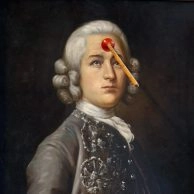
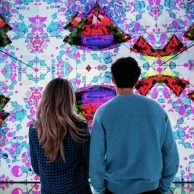
At Moco Museum Amsterdam, visitors can experience authenticated Banksy artworks, many from private collections that would otherwise remain unseen.
The exhibition, titled Laugh Now, is not authorised by Banksy. However, all works are verified by Pest Control, the only official body that authenticates Banksy’s artworks.
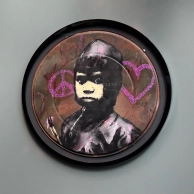
Here, iconic works such as Girl with Balloon, Flower Thrower, Smiling Copper, and pieces from the Crude Oil series are presented in a curated museum context.
Moco Museum Amsterdam is widely recognised as the Banksy museum in Amsterdam, showcasing one of the most extensive collections of authenticated Banksy artworks in the Netherlands.



10. Why is Banksy so famous?
Banksy became famous not just for how his work looks, but for what it does.
He challenges systems. Questions authority. Uses humour to expose uncomfortable truths.
And he does it in places where people don’t expect art to appear.
This combination of anonymity, accessibility, and relevance has made Banksy one of the most influential contemporary artists in the world.

If you’re looking for a museum in Amsterdam with Banksy
If you’re looking for a museum in Amsterdam with contemporary artists like Banksy, Moco Museum Amsterdam offers a curated experience of his work alongside other modern and contemporary artists.
If you’re looking for a museum in Amsterdam after visiting the Rijksmuseum, Banksy’s work offers a shift. From history to immediacy. From observation to confrontation.
If you’re looking for a museum in Amsterdam without crowds, a more intimate setting like Moco allows you to experience these works up close.
And if you’re looking for an indoor activity in Amsterdam that connects art with the present moment, plan your visit to Moco Museum Amsterdam and step into a space where street art meets reflection.
FAQ: Who is Banksy?
Who is Banksy?
Banksy is an anonymous street artist known for politically engaged graffiti and stencil-based artworks.
What is Banksy’s real name?
Banksy’s real name has never been officially confirmed. The artist has chosen to remain anonymous.
Why does Banksy remain anonymous?
Banksy remains anonymous to keep the focus on the message of the artwork rather than the identity of the artist.