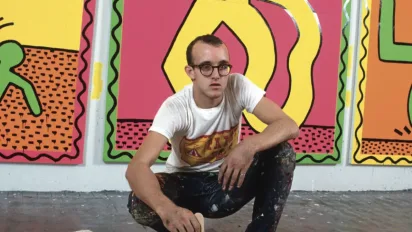

Banksy: The voice of the streets inside the museum
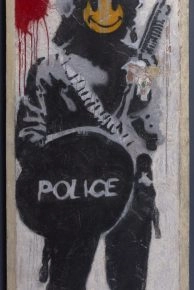
Banksy began making stencils in the early 1990s in Bristol. His approach was fast, direct, and made for public walls. He became known for sharp messages, dark humour, and strong political critique. His work challenged systems of power, questioned authority, and spoke directly to passersby.
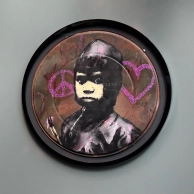
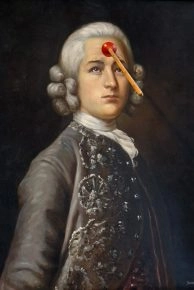
At Moco, works like Peace & Love Glitter and Arrow Head continue that conversation in a new setting. These works are part of the museum’s dedicated Banksy exhibition, where street art enters a curated museum space. They are still bold and critical, but visitors now have more time to stop and think. Inside the museum, the context changes, but the questions remain. What do we value? Who gets to speak? How does protest change when it’s framed?
Some question whether street art belongs in a museum at all. But Banksy’s presence here reflects a broader cultural shift. He has become a global voice, and institutions now act as one of the few spaces where his work can be seen, discussed, and preserved without being removed or destroyed. For visitors, it’s a chance to engage with ideas that began on the street, and still carry the urgency of that setting.
While some of Banksy’s most famous works remain on city walls or appear anonymously in public spaces, many others have been carefully lifted, authenticated, and reframed. Museums, including Moco, provide the infrastructure to share these pieces responsibly. The process opens up important questions around ownership, access, and preservation. Does taking the work off the street remove its power, or extend its message? Visitors bring their own answers.

KAWS and the playful scale of urban icons
KAWS began as a graffiti artist in New Jersey and New York. In the 1990s, he made his name by tagging over bus stop ads and billboards, blending cartoon characters with his own visual language. His early interventions disrupted commercial imagery. They were humorous, familiar, and quietly subversive.
At Moco, KAWS’s sculptures and paintings retain that spirit. Visitors can explore more about his work on the KAWS artist page, where his transition from graffiti culture to museum presence is explored further. His cartoon-like figures, large, slumped, and silent, invite an emotional response. They look playful but feel layered. Over time, their repetition and posture raise questions: What does it mean to be seen? How much of ourselves do we project onto icons?
Visitors often recognise the figures immediately, then pause. There’s a shift from surface to feeling. From recognition to reflection. KAWS shows how street-informed art can move across platforms without losing connection to its roots. He invites the same cultural audience inside, not to soften the message, but to slow it down.
More than most artists from street culture, KAWS has built a practice that spans public sculpture, product design, fashion, and fine art. His Companion figure, in particular, has become a recurring character across cities and platforms. It appears monumental in some contexts and intimate in others. At Moco, this contrast becomes part of the viewer’s experience. What happens when something designed for mass culture asks to be taken seriously?

Why Amsterdam is the perfect stage for street art
Amsterdam has always supported open ideas and independent voices. The city’s history of civic resistance, creative freedom, and public participation makes it a natural stage for street art to take hold. Artists here have long used public space as a canvas for protest, commentary, and celebration.
Today, those exploring street art in Amsterdam museums often discover that the museum setting offers a different kind of access – one that complements the city’s outdoor murals and walking street art tours.
That energy continues inside Moco. Street artists including JR, Stik, Icy & Sot, and Invader are placed in dialogue with Warhol, Haring, Studio Irma, and other contemporary voices. The result is not separation, but connection. A space where public art, pop culture, and digital experience all speak to the present.
In a city known for openness, Moco reflects that same attitude. Visitors move between rooms that hold protest and play, critique and colour. It’s not just a collection, it’s a conversation. Street art in Amsterdam remains active and alive, and the museum adds to that ecosystem by giving the work a new place to resonate.
The rise of museum spaces that engage with street culture also reflects a broader shift in public attitudes. What was once seen as rebellious or even criminal is now understood as a form of cultural commentary. In Amsterdam, that shift is visible both outside and inside. A stencil on a lamppost speaks in one way. A print on a museum wall speaks in another. Both matter. And both are part of the same story.
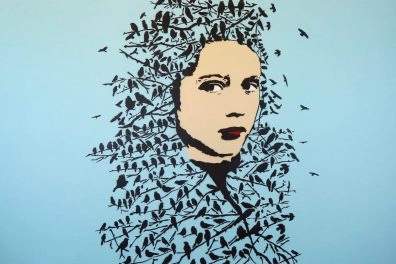
Street Art and the Public Eye
On the street, art is temporary by design. A mural may last years or vanish overnight. That impermanence gives street art its tension and its power. It is made to be seen, but not to be kept.
In the museum, that dynamic shifts. Art that once lived in passing now invites pause. It doesn’t lose its voice, it gains time. For artists like Banksy and KAWS, entering institutional space is not about leaving the street behind. It’s about letting the message travel. Reaching new audiences. Extending the life of a visual language shaped by urgency.
Moco doesn’t claim to replace the street. It offers a parallel space. One where the questions raised outside can be considered inside, with attention and care. Visitors are encouraged to think about the different ways we engage with images, messages, and movements. What lasts? What disappears? What gets remembered?
For visitors wondering where to find street art in Amsterdam beyond outdoor walls, museum spaces like Moco provide a curated perspective that extends the life and visibility of urban art.
Street artists at Moco Museum Amsterdam


The Last Word Belongs to the Street
Street art doesn’t lose its relevance in a museum. It changes how we engage with it. At Moco, works by artists shaped by the street are not removed from their context, they’re expanded. Visitors engage not only with the image, but with the world it came from.
Amsterdam is still a place where freedom and expression shape daily life. On its walls, that freedom is spontaneous. Inside its museums, that freedom becomes reflection. Moco holds space for both. Not by replacing the street, but by listening to it.
This isn’t about taking the art off the street. It’s about showing how street art in Amsterdam can live in both worlds, open to everyone, inside and outside.

Street Art Museum Amsterdam – FAQ
Is there a street art museum in Amsterdam?
Yes. Moco Museum Amsterdam presents works by artists connected to street culture, including Banksy, KAWS, JR, Stik, Icy & Sot, and Invader. While Amsterdam’s street art scene remains active outdoors, Moco offers a museum context where street art can be viewed, discussed, and preserved indoors.
Where can I find a street art museum in Amsterdam?
You can find street art inside Moco Museum Amsterdam, located on Museumplein. The museum integrates street-informed artists within its broader modern and contemporary collection, offering visitors a structured way to explore street art in Amsterdam museums.
Are there guided tours for street art in Amsterdam museums?
Yes. Visitors can explore street art works at Moco Museum Amsterdam as part of guided museum tours. These tours provide context about artists like Banksy and KAWS and explain how street art transitioned from public walls to curated museum spaces.
Does Amsterdam have walking street art tours or museum-based street art tours?
Amsterdam offers both outdoor walking street art tours and museum-based experiences. At Moco Museum Amsterdam, street art can be experienced indoors as part of a curated museum visit, offering a different perspective from outdoor tours.
What makes Moco different from outdoor street art tours in Amsterdam?
Outdoor street art tours explore temporary murals and graffiti across neighbourhoods. At Moco Museum Amsterdam, works influenced by street culture are preserved and contextualised within a museum setting. The difference lies in permanence, curation, and the ability to reflect without time pressure.
Can I book guided street art tours in Amsterdam through Moco Museum?
Guided tours at Moco Museum Amsterdam include insights into artists connected to street art. Visitors can check the official website for current tour availability and booking information.Tour details and ticket availability can be found via the official ticket page.