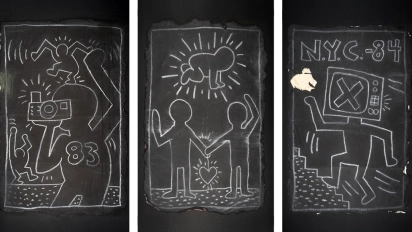
Soon after, he began making chalk drawings on the New York subway walls as a means of introducing the world to his distinct visual language. These works are now widely known as Keith Haring subway drawings. A Keith Haring subway drawing refers to temporary chalk drawings created on unused black advertising panels in the New York City subway system, functioning as a public testing ground for his symbols and visual rhythms.
Defined by a rhythmic flow of bold lines, simplified figures, and recurring Keith Haring symbols like the radiant baby, barking dog, dancing people, smiles and angelic figures, these Keith Haring drawings formed a repeatable and accessible visual vocabulary. Haring referred to the subway as his “laboratory,” a place to experiment and interact with people from all walks of life. This commitment to public engagement became a defining feature of his work and is reflected in his large-scale murals and socially conscious art.
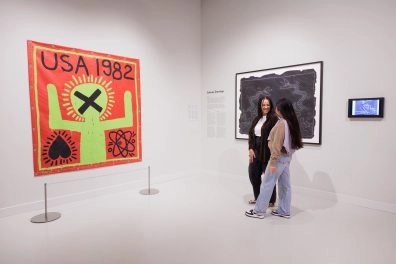
In cities like London, Keith Haring’s work continues to resonate within contemporary urban culture. At Moco Museum London, the Keith Haring London presentation within Moco Masters introduces visitors to examples of Haring’s large-scale canvases and commercial collaborations.
Early Experimentation and the Power of Repetition
Keith Haring’s artistic style was informed by his understanding of semiotics, the study of symbols and how meaning is constructed through visual signs, which he explored while studying at the School of Visual Arts. His piece Untitled (1978), displayed at Moco Museum London, reflects this early exploration of patterns and symbols. Created with sumi ink and paint on paper, the work features interconnected shapes and weaving black lines that reflect the energy and rhythm of urban life.
Keith Haring drawings are instantly recognisable. Using universal symbols, his approach embodied his belief that art should communicate directly with people, transcending language and social barriers.
It is important to distinguish between drawings and doodles in understanding Keith Haring doodles. A drawing refers to a composed and intentional visual work, while a doodle suggests a spontaneous or casual sketch. Although some Keith Haring drawings may appear playful or spontaneous, they were part of a deliberate communication system built through repetition and public exposure.
Keith Haring exhibitions 2026 continue to revisit this early period, recognising how the subway drawings redefined the relationship between street art and institutional spaces, including Keith Haring in London.
Keith Haring Symbols and Their Meaning
Keith Haring symbols form a visual vocabulary rather than isolated images. In visual culture, a symbol is an image that represents a broader concept or idea beyond its literal form.
Recurring Keith Haring symbols include:
- The radiant baby, often interpreted as a symbol of innocence, energy, and potential
- The barking dog, which can represent authority, warning, or aggressive power structures
- Dancing figures, expressing collective joy, movement, and shared humanity
- Angels and simplified human forms, reflecting themes of transcendence and moral tension
The meaning of Keith Haring symbols emerges through repetition. Repetition in Keith Haring drawings is not decoration but communication. By repeating forms, he reinforced urgency, rhythm, and accessibility. This universality explains why Keith Haring in London remains relevant today.
Pop Culture Meets Street Art
Haring’s fascination with pop culture began in childhood, particularly with Walt Disney’s characters. In 1985, he created Mickey Mouse USA, a large-scale acrylic painting that merges pop art with New York’s street culture. Haring’s Mickey Mouse is playful yet layered with deeper cultural references.
At the top of the painting, Haring includes “Andy Mouse,” a nod to his close relationship with Andy Warhol, whom Haring regarded as one of the most influential figures in his life and of the 20th century. Warhol’s influence on Haring’s career is evident in the use of bold colour, simplified figures, and the blending of commercial and fine art aesthetics.
This intersection of street art, commercial culture, and fine art legitimacy positioned Keith Haring as a defining modern artist. In 2021, the Keith Haring Foundation worked with Coach and Disney to create a line of apparel and accessories featuring his Mickey Mouse designs, a testament to his design’s influence on both art and fashion. In cultural capitals like London, this crossover between art and design continues to shape visual culture.
Life Inspires Art
Haring’s work extended beyond pop culture into social and political activism. Diagnosed with AIDS in 1988, Haring used his art to raise awareness about the disease and challenge the social stigma surrounding it.
In 1989, he established the Keith Haring Foundation, which continues to support AIDS research and children’s programmes. This foundation remains central to preserving and contextualising Keith Haring drawings and exhibitions worldwide, including institutional presentations of Keith Haring in London.
His piece Untitled (Burning Skull) (1987), on display at Moco Museum London, reflects a less-known, darker side of Haring’s work. Painted on enamel and aluminum, the piece features a skull engulfed in flames, surrounded by figures with X-ed out eyes and razor-sharp teeth, a possible reference to religious imagery and the existential threat of AIDS.
Furthermore, Haring’s religious background also influenced his work. Raised in a Christian household, a young Keith Haring took his impassioned beliefs to an extreme when he briefly participated in the Jesus Movement in his teenage years. His work often references themes of salvation and moral reckoning, blending pop culture with spiritual symbolism.
Keith Haring in London at Moco Museum
At Moco Museum London, selected works by Keith Haring are presented within a broader narrative of modern and contemporary art, highlighting his influence on public art and visual culture.
Haring’s influence on street art, pop culture, and contemporary design remains profound at Moco Museum London. His legacy is also evident in the growing influence of street art in major cities like London, highlighting works that merge social commentary with playful, engaging visuals.
Whether through gallery exhibitions, fashion collaborations, or public murals, Keith Haring in London remains a vibrant and powerful reminder that art is not only a form of expression, it is a catalyst for change.
Exhibiting artists include



Reviews
Practical Information
-
Opening Hours
Monday – Thursday: 10:00 – 17:00
Friday – Saturday: 10:00 – 18:00
Sunday: 10:00 – 17:00
-
Duration
Approximately 90-120 minutes
-
Location
1-4 Marble Arch, London, UK.
Get directions via this link. Check out things to do in the area!
-
Contact
Email us at [email protected] or visit our contact page.
-
Audio tour
Free audio tour, bring your headphones.
-
About
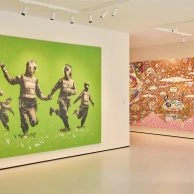
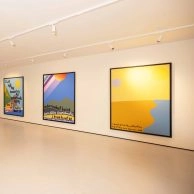
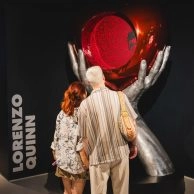
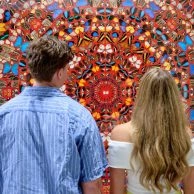
Moco Museum London is an independent modern and contemporary art museum presenting influential contemporary voices including Banksy, Warhol, Basquiat, Haring, Kusama, and Robbie Williams, focused on modern, contemporary, digital and immersive art that reflects life today.
Reviews Media
-
 Head to the newly opened Moco Museum to find iconic works celebrated by modern artists and upcoming stars. Featuring works from “Moco Masters” Andy Warhol, Jean-Michel Basquiat and Keith Haring, the Moco Museum is home to a vast range of iconic and daring creations.
 -
 Head to the newly opened Moco Museum to find iconic works celebrated by modern artists and upcoming stars. Featuring works from “Moco Masters” Andy Warhol, Jean-Michel Basquiat and Keith Haring, the Moco Museum is home to a vast range of iconic and daring creations.
 -
 The scale of Moco Museum's London flagship is so impressive, it allows room for colossal, vital pieces by the likes of Daniel Arsham and Damien Hirst to sit alongside crowd-pleasers like Banksy's Flower Thrower. A must for any art lover and highly recommended.
 -
 Iconic works by internationally renowned artists and rising stars.
 -
 Experience the transformative power of performance art.