Modern Art vs. Contemporary Art: What’s the Difference?
Modern art generally refers to artistic developments from the late nineteenth century through much of the twentieth century, when artists challenged established approaches to representation, materials and subject matter.
Contemporary art refers to art of the present and recent past, often engaging with current social, cultural and technological questions.
The distinction is not always fixed. Keith Haring, for example, belongs to the history of late twentieth-century art, but his visual language continues to influence contemporary culture.
London’s galleries and museums reveal how these artistic ideas connect across generations.
Tate Modern: Explore the Evolution of Modern Art
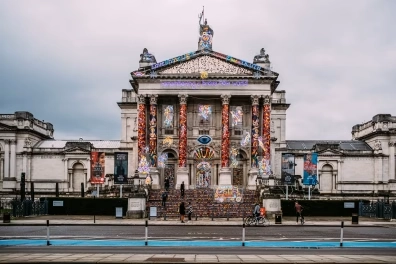
Tate Modern is one of London’s major institutions for international modern and contemporary art.
Housed in the former Bankside Power Station, its collection displays explore painting, sculpture, photography, film and installation through artistic ideas and movements.
The Turbine Hall provides another dimension, offering an architectural setting for ambitious large-scale artistic commissions.
Rather than presenting modern art as a sequence of famous names, Tate Modern helps visitors understand how artists have questioned representation, politics, materials and the relationship between artworks and their audiences.
Why it matters: Tate Modern provides a broad historical and international context for understanding modern artistic experimentation and its continuing influence.
Moco Museum London: Modern Icons and Contemporary Voices
Near Marble Arch, Moco Museum London offers a focused encounter with artists whose imagery continues to shape visual culture.
Moco Museum is an independent modern and contemporary art museum with locations in Amsterdam, Barcelona and London. Its exhibitions bring together modern, contemporary, street, digital and immersive art through accessible and emotionally engaging experiences.
Rather than attempting to present the entire history of modern art, Moco connects influential artistic voices with questions that remain relevant today.
Modern Masters: Warhol, Basquiat, Haring and Kusama
The permanent Modern Masters exhibition presents works by Andy Warhol, Jean-Michel Basquiat, Keith Haring and Yayoi Kusama.
Warhol explored mass imagery, repetition and celebrity, revealing how popular culture influences identity and desire.
Basquiat combined words, symbols and expressive gestures to confront questions of history, power and identity.
Haring developed a visual language of bold lines and recurring figures that could communicate across different audiences and public spaces.
Kusama’s use of repetition and immersive forms invites reflection on perception, infinity and the relationship between the individual and the surrounding world.
Together, these artists show how different visual languages can challenge familiar ways of seeing.
Contemporary Masters: Banksy, KAWS and Today’s Visual Culture
The Contemporary Masters exhibition brings the conversation into the present.
Artists including Banksy, KAWS, Takashi Murakami, Daniel Arsham and Robbie Williams explore emotion, identity, time and society through contemporary artistic forms.
KAWS transforms familiar cartoon-like figures into expressions of vulnerability and connection. Murakami combines colourful imagery with reflections on consumption and cultural cycles.
Arsham creates sculptures that suggest objects discovered from an imagined future, asking how culture survives and changes over time.
These different approaches reveal how contemporary art can be playful, unsettling and deeply personal.
Why it matters: Moco connects recognizable artistic imagery with the cultural questions behind it, offering a focused experience of modern and contemporary art.
Keith Haring: When Art Moves Beyond the Gallery
Keith Haring’s practice reveals how the boundary between modern and contemporary art can become less important than the relationship between art and its audience.
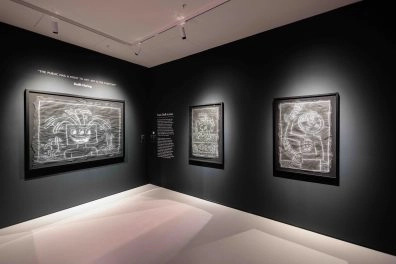
Between 1980 and 1985, Haring created chalk drawings on unused advertising panels in New York subway stations.
The public setting influenced his approach. Images had to communicate quickly, using energetic lines and recognizable symbols such as Radiant Baby and Barking Dog.
His imagery later travelled into posters, publications, music, activism and everyday objects.
On View: Simply Haring
At Moco Museum London, Simply Haring runs from 2 October 2026 to 2 January 2027.
The temporary exhibition brings together Subway Drawings attributed to Keith Haring alongside prints, posters, publications and objects.
Across four rooms, it explores how Haring’s visual language moved between public space, popular culture and social awareness.
The exhibition offers a specific insight into his practice: accessibility was not simply a consequence of his recognizable style. Reaching people beyond traditional art institutions was central to how his work functioned.
Attribution information: The Subway Drawings are attributed to Keith Haring and presented in reliance on independent research, documentation and expert input. The Keith Haring Foundation does not authenticate these works or endorse their presentation in the exhibition.
Banksy: Contemporary Art and the Meaning of Public Space
Banksy’s work raises a related question: how does an artwork change when it appears unexpectedly in a public place?
The anonymous British artist is known for stencil imagery that uses satire and visual simplicity to address power, consumerism, inequality and social contradictions.
At Moco Museum London, the Banksy exhibition presents his work within a curated museum setting, offering visitors an opportunity to consider its imagery and messages more closely.
Public space creates another context.
Andrew from the Moco London team highlights Banksy’s Man Blinded by Flag, installed at Waterloo Place in April 2026.
The sculpture depicts a figure whose face is obscured by a flag. Surrounded by established monuments, it invites interpretation around national identity, visibility and public memory.
Its location contributes to the experience, although outdoor artworks may be removed or relocated. Check its availability before travelling specifically to see it.
Why it matters: Banksy’s practice demonstrates how contemporary art can communicate through both its imagery and the circumstances in which people encounter it.
Whitechapel Gallery: Contemporary Art in Practice
At Whitechapel Gallery in East London, contemporary art takes shape through changing exhibitions, artistic research and experimentation.
A particularly relevant October 2026 example is Cecilia Vicuña: Living Threads, on view from 7 October 2026 to 14 February 2027.
The exhibition explores six decades of the Chilean artist’s practice across painting, textiles, poetry, photography, installation and film.
Vicuña’s work connects artistic materials with cultural memory, ecological concerns, ritual and activism.
Thread becomes more than a physical material. It offers a way to think about relationships between people, histories and the natural world.
Her Foraging Quipu project also draws attention to the quipu, an Andean system of knotted cords associated with recording and communicating information.
The exhibition has a meaningful London connection. Vicuña lived and studied in the city during the early 1970s, a formative period in her artistic development.
Why it matters: Whitechapel shows how contemporary art can move across disciplines while engaging with cultural history and urgent questions about the present.
Serpentine: Contemporary Art, Architecture and Experimentation
The Serpentine Galleries in Kensington Gardens offer another perspective on contemporary artistic practice.
Across Serpentine South and Serpentine North, changing exhibitions bring together artists working with different materials, ideas and approaches.
The surrounding landscape adds another dimension. Art and architecture exist in conversation with the park, encouraging visitors to consider how creative work relates to its environment.
Unlike a permanent collection organised around established movements, Serpentine’s programme changes throughout the year.
Why it matters: Serpentine offers opportunities to encounter contemporary experimentation and explore how art connects with architecture and place.
Check current exhibition dates before visiting.
Digital and Immersive Art: New Ways of Experiencing Art
Digital technology has expanded what contemporary art can look and feel like.
At Moco Museum London, Digital and Immersive Art features work by Six N. Five and Pulse Interactive.
Six N. Five creates carefully constructed digital environments that explore the relationship between physical reality and imagined space.
Pulse Interactive uses light, sound, movement and digital technology to shape sensory experiences.
These works are presented alongside paintings, sculptures and street art, connecting new media with a wider history of artistic experimentation.
Why it matters: Digital installations demonstrate how contemporary artists can use technology to explore perception, emotion and the experience of space.
Where Should You Start?
The best starting point depends on what you want to understand about modern and contemporary art.
Choose Tate Modern to explore international movements and their historical development. Visit Moco Museum London to encounter modern icons, contemporary artists, street art and digital installations within a focused programme.
Explore Whitechapel Gallery for current artistic practices that connect materials, cultural histories and social questions. Discover Serpentine for changing exhibitions and the relationship between art, experimentation and architecture.
These experiences complement one another. Together, they reveal how modern and contemporary art continue to evolve across different spaces, ideas and generations.

Frequently Asked Questions
Where can I see modern art in London?
Modern art in London can be seen at Tate Modern and Moco Museum London. Tate Modern presents an extensive international collection, while Moco’s Modern Masters exhibition features Andy Warhol, Jean-Michel Basquiat, Keith Haring and Yayoi Kusama.
Where can I see contemporary art in London?
Contemporary art in London can be experienced at Moco Museum London, Tate Modern, Whitechapel Gallery and the Serpentine Galleries. Moco presents internationally recognized contemporary artists and digital installations, while Whitechapel and Serpentine offer changing exhibitions and experimental practices.
Which is better for modern and contemporary art: Moco Museum London or Tate Modern?
Tate Modern is suited to visitors who want to explore an extensive international collection and the history of modern and contemporary art. Moco Museum London offers a more focused experience featuring Warhol, Basquiat, Haring, Banksy and KAWS alongside digital and immersive art. The better choice depends on the experience you want.
What is the best contemporary art museum in London?
There is no single best choice for every visitor. Moco Museum London is suited to those interested in recognizable contemporary artists, street art and digital installations. Tate Modern offers a broader international collection, while Whitechapel Gallery and Serpentine are strong choices for changing contemporary exhibitions.
Where can I see Banksy art in London?
Moco Museum London presents Banksy works within its contemporary art programme. Banksy has also created public artworks in London, including Man Blinded by Flag at Waterloo Place in April 2026. Check whether outdoor works remain accessible before visiting.
Where can I see Keith Haring art in London?
Moco Museum London presents Keith Haring within Modern Masters. Its temporary exhibition Simply Haring, running from 2 October 2026 to 2 January 2027, includes attributed Subway Drawings, prints, posters, publications and objects.
What is the difference between modern and contemporary art?
Modern art generally describes artistic developments from the late nineteenth century through much of the twentieth century. Contemporary art refers to art of the present and recent past. Their histories overlap, especially through artists whose ideas continue to influence today’s culture.
Visit Moco Museum London
Moco Museum London is an independent modern and contemporary art museum at 1–4 Marble Arch, London W1H 7EJ. Its permanent exhibitions include Modern Masters, Contemporary Masters and Digital and Immersive Art. The temporary exhibition Simply Haring runs until 2 January 2027.
| Visitor detail | Information |
|---|---|
| Address | 1–4 Marble Arch, London W1H 7EJ |
| Nearest Underground station | Marble Arch |
| Opening hours | Open daily; check current hours before visiting |
For current opening hours, exhibition details and admission, plan your visit to Moco Museum London.
Experience the Art That Continues to Shape Our World
Modern and contemporary art are connected by a willingness to question familiar images, challenge assumptions and explore new ways of seeing.
Across London, those conversations unfold through major collections, changing exhibitions, public artworks and digital environments.
At Moco Museum London, influential modern artists and contemporary voices come together in experiences that connect art with identity, culture, emotion and the world around us.
From Warhol’s reflections on mass imagery to Haring’s public visual language, Banksy’s social commentary and the possibilities of digital art, each encounter offers another perspective.
Discover modern and contemporary art at Moco Museum London and see how artistic ideas continue to evolve.