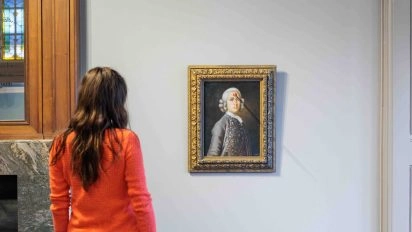
From Stencils to Spectacles: The Legacy of Dismaland
Immersion does not always require projections, screens, sound, or technology. Sometimes it begins with context.
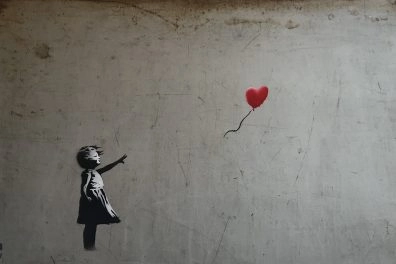
Banksy built his visual language in public space. His stencil works appear within streets and cities rather than separating themselves from everyday life. A wall is not simply a surface. Its location, surroundings, and audience become part of how the artwork communicates.
Dismaland extended this relationship between art and environment to a much larger scale. The temporary art project transformed the familiar language of an amusement park into a deliberately unsettling constructed environment. Instead of presenting individual artworks in isolation, the wider setting became part of the encounter.
Dismaland offers an important example of Banksy extending his use of context beyond the individual image. Visitors moved through an environment in which art, satire, atmosphere, and space worked together. The experience depended not only on what they saw, but also on where they were and how they moved through it.
The connection should not be overstated. Banksy is primarily a street artist, not an immersive artist, and Dismaland should not be treated as the origin of contemporary immersive art. Instead, it demonstrates how Banksy could take a principle already present in his street practice and expand it across an entire visitor environment: context changes experience.
How Banksy Redefined the ‘Art Experience’
Street art arrives without requiring an invitation. You might encounter it while walking to work, turning a corner, or moving through the city. There is no prescribed moment to begin looking and no fixed distance from which the work should be understood.
Banksy repeatedly uses familiar symbols to explore authority, control, resistance, hypocrisy, and the contradictions of modern urban life. Rats can become survivors within broken systems. Monkeys can expose absurdity and obedience. Police figures question authority. Cameras turn surveillance back towards the viewer.
When these symbols appear in public, the city becomes more than a backdrop. It becomes part of the question.
That relationship between work and environment is also central to many contemporary immersive experiences. Instead of asking viewers to observe an isolated object, immersive art can consider the wider space around them. Scale, movement, light, material, sound, and position can all change how an artwork feels.
Banksy reaches that relationship through the street. Dismaland extended it into a constructed environment.
From Passive Viewer to Active Participant
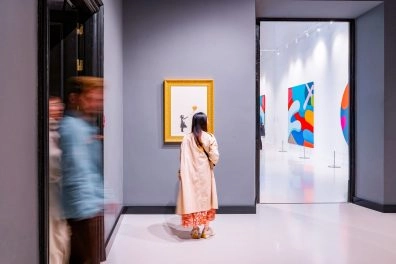
Traditional gallery conventions can imply a simple instruction: stand here and look.
Banksy complicates that relationship.
His work often depends on recognition. A familiar image draws you in, then satire shifts the meaning. Something funny becomes uncomfortable. Something apparently simple opens into a question about power, inequality, war, authority, or surveillance.
The viewer has to complete part of that process.
This is one of the strongest connections between Banksy and immersive art. Immersion is not only about being surrounded physically. It can also mean being implicated emotionally or intellectually. The experience changes because your own assumptions enter the work.
An immersive art experience may create that participation through scale, digital environments, light, sound, or movement. Banksy achieves something related through recognition and disruption. The methods differ, but both approaches can ask the viewer to do more than simply observe.
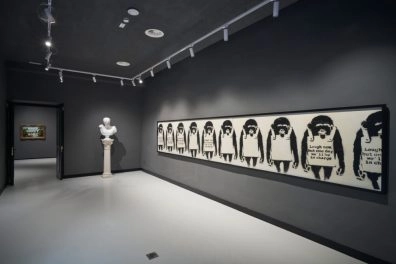
5 Ways Banksy’s Practice Connects with Contemporary Exhibition Design
Banksy’s practice offers a useful lens for understanding ideas that have become increasingly visible in experiential exhibition design:
1. Making context part of the work. Banksy demonstrates that surroundings can influence meaning rather than simply contain an artwork.
2. Turning movement into part of the encounter. From street interventions to Dismaland, viewers experience the work by moving through a particular environment.
3. Breaking the distance between art and audience. Banksy’s images interrupt familiar spaces and make the viewer’s own response part of the experience.
4. Using atmosphere to communicate ideas. Dismaland demonstrates how a wider setting can reinforce satire, discomfort, and social commentary.
5. Expanding where art can happen. Streets, walls, public spaces, and unexpected environments can all become places for artistic encounter.
These connections do not make Banksy the originator of immersive art. Instead, his practice belongs to a broader shift in how contemporary art can involve environment, audience, and context alongside the artwork itself.
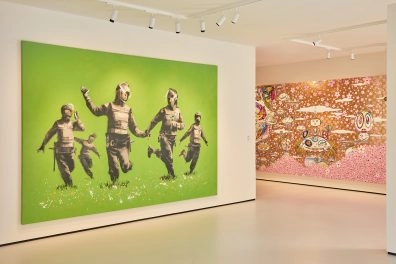
Immersive Elements at Moco Museum London
The connection becomes especially interesting when Banksy moves indoors.
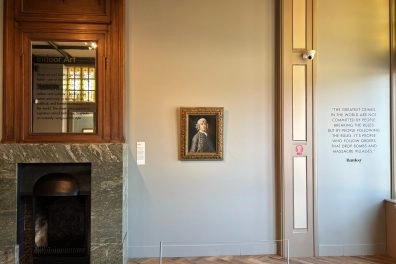
At Moco Museum London, original and authenticated Banksy works are presented within the permanent yet evolving Contemporary Masters exhibition. Authority, surveillance, resistance, humour, and social contradiction still sit at the centre of the encounter. Artworks may rotate over time.
The change of context creates a new tension. What happens to an image shaped by the language of the street when it enters an institution? Does its meaning change? Or does the contrast make its questions more visible?
There is no single answer. That uncertainty is part of the experience.
Moco Museum is an independent modern and contemporary art museum with locations in Amsterdam, Barcelona, and London. It presents modern, contemporary, digital, immersive, and street art through accessible and emotionally engaging experiences.
At Moco Museum London, Banksy’s work exists alongside contemporary, digital, and immersive practices rather than being presented as immersive art itself. Visitors can encounter his politically charged imagery before exploring Digital & Immersive Art, where different media and spatial approaches reconsider the relationship between artwork, environment, and audience.
The Future of Street Art: Digital and Sensory Integration
Street art begins with place. Digital and immersive art can expand what that idea means.
Projection, sound, light, moving image, interactive systems, and digital environments give contemporary artists different ways to make space active. The technologies may be different, but the underlying question can feel familiar: what changes when the environment stops being a neutral container and becomes part of the artwork?
Banksy offers one answer through disruption. Contemporary digital and immersive artists offer others through technology, sensory experience, scale, and movement.
The connection is not a straight line from Banksy to digital immersive art. It is a shared interest in breaking the distance between viewer, artwork, and environment.
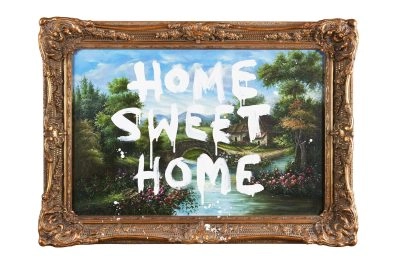
Why Banksy Still Matters to London’s Visual Culture
London understands the language of disruption.
It is a city shaped by subculture, protest, fashion, reinvention, public imagery, and competing voices. Banksy’s anonymity and refusal to separate art neatly from politics make his work particularly resonant within this environment.
Banksy is widely regarded as one of the most influential street artists of the 21st century. His art uses satire and dark humour to address themes including authority, opposition to war, surveillance, environmental concerns, and wider sociopolitical tensions.
His influence extends beyond a recognisable stencil style. His practice offers an important example of how contemporary art can interrupt daily life, communicate immediately, and turn its surroundings into part of the message.
That idea remains relevant as artists continue exploring experiential ways of connecting with audiences.
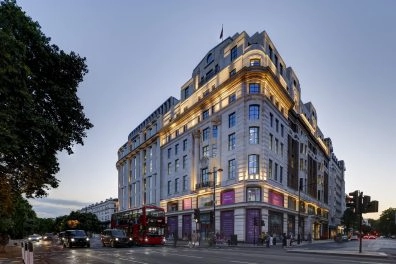
Experiencing Banksy and Immersive Art at Moco Museum London
Seeing Banksy alongside contemporary, digital, and immersive art creates an unexpected conversation.
One approach begins on the street. Another may begin with digital technology, installation, scale, light, or sound. Yet both can challenge the distance between artwork and audience.
Moco Museum London brings these forms into proximity rather than treating them as separate worlds. Visitors can encounter Banksy’s politically charged imagery alongside immersive art, where space itself becomes part of how art is experienced.
Banksy may not create immersive art in the conventional sense. But from the disruptive encounter of street art to the constructed environment of Dismaland, his practice offers a compelling lens for thinking about a principle shared by many experiential artworks: art can change not only what you see, but how you experience the space around you.
Moco Museum London is located at 1–4 Marble Arch, London, UK. The museum is open daily, and opening hours may vary.
Opening hours: Open daily. Hours may vary.
Location: 1–4 Marble Arch, London, UK.
Banksy changed expectations about where art belongs, how directly it can speak, and what happens when the surrounding environment becomes part of its meaning.
At Moco Museum London, his work can be considered alongside the digital, immersive, street, modern, and contemporary practices shaping visual culture today. Different media. Different methods. A shared invitation to look again.
Plan your visit and experience how art can change the space around you.
Frequently Asked Questions
What is immersive art?
Immersive art is an approach in which the viewer experiences an artwork through the surrounding environment as well as the work itself. It can use elements such as space, scale, light, sound, movement, digital media, or interaction to create a more active relationship between artwork and audience.
Was Dismaland an immersive art piece?
Dismaland was a large scale temporary art project by Banksy. While Banksy is not primarily an immersive artist, Dismaland can be understood as experiential because visitors entered a constructed environment in which art, satire, atmosphere, and the surrounding space worked together.
How does Moco Museum incorporate immersive technology?
Moco Museum presents digital and immersive art alongside modern, contemporary, and street art. At Moco Museum London, visitors can experience works that use digital media and spatial approaches to change the relationship between artwork, environment, and viewer.
Is Banksy an immersive artist?
Banksy is primarily known as a street artist rather than an immersive artist. His connection to immersive art lies in his use of public space, context, audience engagement, and disruption to shape how an artwork is experienced.
Where can I see Banksy art in London?
Original Banksy art can be seen at Moco Museum London, where authenticated works are displayed in a curated presentation within Contemporary Masters. Artworks may rotate over time.
Are the Banksy artworks at Moco Museum London authentic?
Yes. Banksy artworks shown at Moco Museum London are independently verified for provenance and authenticity and presented with curatorial care.
Can I see immersive art at Moco Museum London?
Yes. Moco Museum London presents digital and immersive art alongside modern, contemporary, and street art, creating different ways for visitors to experience art within the museum.