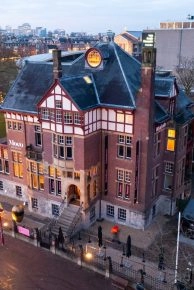
Experiencing Yayoi Kusama on Museumplein
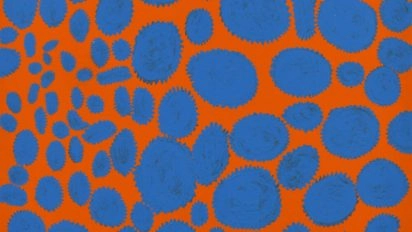
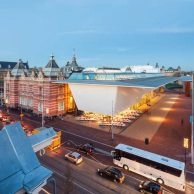
Visitors can experience Yayoi Kusama at the Stedelijk Museum Amsterdam during the landmark retrospective presented from 12 September 2026 until 17 January 2027. Visitors can also discover works by Yayoi Kusama at Moco Museum Amsterdam, where she is featured as part of the Modern Masters exhibition. Because both museums are located on Museumplein, they can easily be visited in a single day. Together, they offer two complementary perspectives: one dedicated to Kusama’s extraordinary artistic journey, the other placing her work within the wider story of modern and contemporary art.
Why Everyone Is Searching for Yayoi Kusama Amsterdam
The growing interest in Yayoi Kusama Amsterdam isn’t happening by chance.
It follows the journey of one of Europe’s most ambitious travelling exhibitions.
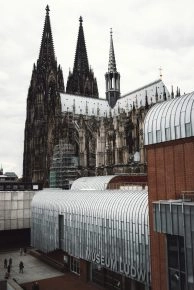
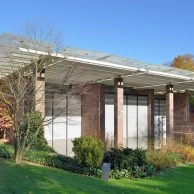
The retrospective first opened at Fondation Beyeler near Basel before travelling to Museum Ludwig in Cologne. Created in close collaboration with Yayoi Kusama and her studio, the exhibition celebrates more than seven decades of artistic innovation while bringing together works rarely seen in a single presentation.
When the Cologne exhibition closes on 2 August 2026, Amsterdam becomes the exhibition’s final destination.
For many visitors, particularly those travelling from Germany, this makes the Dutch capital the natural next stop. Cologne is only a few hours away by train, making Amsterdam the perfect destination for a contemporary art weekend centred around Yayoi Kusama.
More than 300 artworks trace Kusama’s creative journey from early drawings made in the 1930s to new immersive installations created specifically for the retrospective. Visitors encounter paintings, sculptures, collages, performances, fashion, literary works, and the celebrated Infinity Mirror Rooms that have captivated audiences around the world.
Rather than presenting isolated masterpieces, the exhibition reveals the evolution of an artist who has continually reinvented herself while remaining unmistakably true to her vision.
More than a retrospective, the exhibition reveals how one artist continually reimagined painting, installation, performance, and immersive art—leaving a lasting influence on contemporary visual culture.
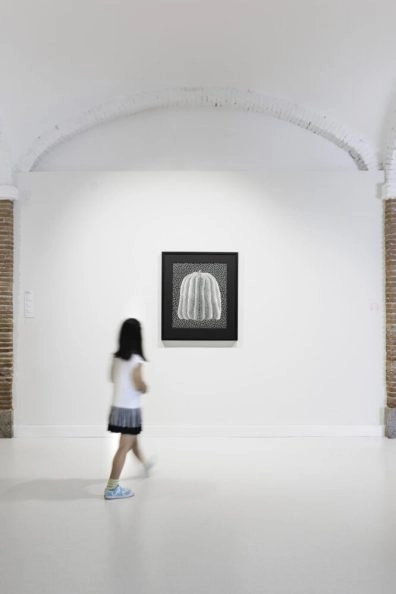
Why Yayoi Kusama Continues to Inspire the World
Few living artists have shaped contemporary art as profoundly as Yayoi Kusama.
Her iconic pumpkins, Infinity Mirror Rooms, and signature polka dots have become part of global visual culture. Yet what continues to draw millions of visitors isn’t simply the imagery—it’s the emotion behind it.
Throughout her career, Kusama has transformed deeply personal experiences into artworks that feel universal. Repetition becomes meditation. Dots become infinity. Mirrors dissolve the boundaries between ourselves and the spaces we inhabit.
As Kusama once wrote:
“Our earth is only one polka dot among a million stars in the cosmos.”
This simple statement captures the essence of her work. Rather than encouraging us to escape reality, Kusama invites us to reconsider our place within it.
Standing inside one of her immersive installations is an experience unlike any other. Perspective shifts. Time slows. The artwork becomes something you inhabit rather than simply observe.
This ability to balance visual wonder with emotional reflection continues to captivate audiences across generations. Children are drawn to the colour and scale of her installations. Artists admire the consistency of her vision. Contemporary audiences connect with themes of identity, self-expression, mental health, and belonging that remain as relevant today as when she first began creating.
Her work reminds us that contemporary art doesn’t always provide answers.
Sometimes, it simply changes the questions we ask.
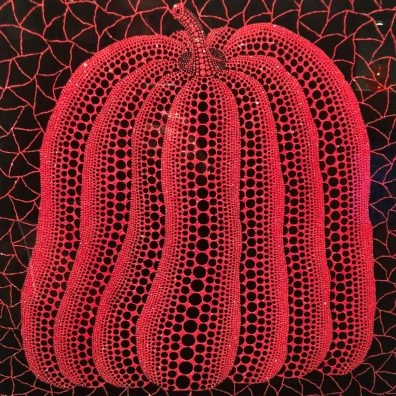
Kusama Among the Modern Masters
Some artists define an era.
Others change the way we see the world.
Yayoi Kusama does both.
Over more than seventy years, she has reimagined painting, sculpture, installation, performance, fashion, and immersive art, influencing generations of artists working across disciplines today. Her impact extends far beyond museums into design, architecture, popular culture, and digital experiences.
For Moco Museum, Kusama’s place within Modern Masters reflects a broader curatorial vision: bringing together artists whose ideas challenged convention and continue to shape how we experience contemporary culture today.
Seeing Kusama alongside Andy Warhol, Jean-Michel Basquiat, Keith Haring, Banksy, and Marina Abramović reveals unexpected connections.
Warhol transformed repetition into a reflection on consumer culture.
Keith Haring believed art should belong to everyone.
Basquiat challenged history and identity through expressive visual language.
Banksy continues to question power through the language of the street.
Each artist approaches the world differently, yet they share a common belief: art has the power to challenge convention, spark conversation, and change the way we see the world.
Together, their work transforms Museumplein into more than a museum district. It becomes a place where ideas, generations, and artistic movements continue to inspire one another.
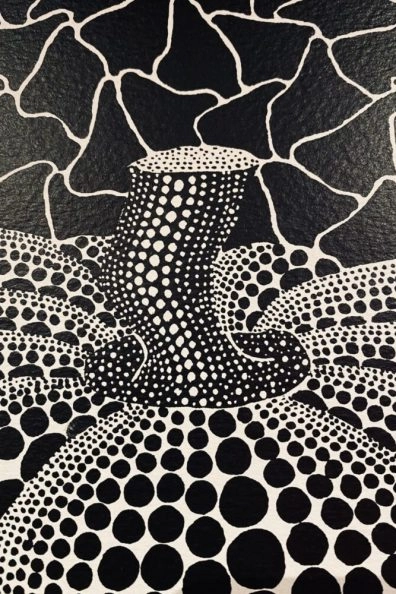
From Kusama to Contemporary Art
One of the greatest strengths of visiting Museumplein is that your experience doesn’t end when you leave a gallery.
Instead, it expands.
After exploring Yayoi Kusama’s extraordinary retrospective at the Stedelijk Museum, many visitors leave with a new appreciation for how contemporary art can transform space, emotion, and perception. Just a few steps away, Moco Museum invites you to continue that exploration through artists who, like Kusama, challenged conventions and redefined what art could be.
Rather than revisiting the same story, Moco broadens the conversation.
It asks what connects artists as different as Yayoi Kusama, Andy Warhol, Jean-Michel Basquiat, Keith Haring, Banksy, and Marina Abramović. Their styles may be distinct, but they all share something essential: the courage to question accepted ways of seeing the world.
Together, they reveal contemporary art not as a single movement, but as an ongoing dialogue between generations, ideas, and perspectives.
Beyond Infinity: Immersive Art at Moco Museum
Yayoi Kusama helped redefine immersive art long before the term became widely used.
Her Infinity Mirror Rooms transformed the relationship between artwork and viewer, inviting visitors to step inside carefully constructed worlds of light, reflection, and endless possibility. Rather than standing in front of art, audiences became part of it.
Today, immersive art continues to evolve.
At Moco Museum Amsterdam, artists explore digital technology, installation, light, movement, and interaction to create experiences that engage both the senses and the imagination. These works don’t imitate Kusama’s practice; they continue a broader conversation about participation, perception, and the emotional power of contemporary art.
For visitors inspired by Kusama’s immersive environments, Moco offers another perspective on how artists continue to push creative boundaries and invite audiences to experience art in new ways.
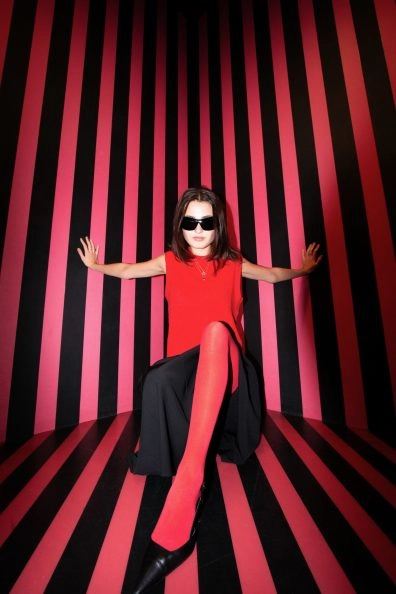
Why Yayoi Kusama Belongs in Modern Masters
Some artists create remarkable works.
Others fundamentally change the language of art.
Yayoi Kusama belongs firmly in the second category.
For more than seventy years, she has challenged traditional ideas of painting, sculpture, installation, performance, and public art. Her influence extends far beyond museums into fashion, architecture, design, and contemporary visual culture, inspiring generations of artists working across disciplines.
This is why Kusama forms part of Modern Masters, Moco Museum Amsterdam’s exhibition celebrating artists whose work has transformed the course of modern and contemporary art.
Seeing Kusama within this wider context reveals unexpected connections.
Andy Warhol turned repetition into a reflection on consumer culture.
Keith Haring believed art should be accessible to everyone.
Jean-Michel Basquiat transformed history, identity, and social commentary into expressive visual language.
Banksy continues to challenge authority through the language of the street.
Marina Abramović redefined the relationship between artist and audience through performance.
Each artist speaks with a unique voice, yet together they demonstrate how contemporary art continually evolves through experimentation, imagination, and the willingness to challenge convention.
Rather than presenting isolated masterpieces, Modern Masters encourages visitors to see these artists in conversation with one another.
Experiencing these artists together reveals contemporary art as an ongoing conversation—one that continues long after you’ve left the gallery.
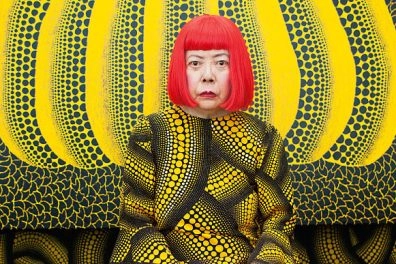
Planning Your Yayoi Kusama Day on Museumplein
One exhibition may inspire your visit to Amsterdam, but Museumplein offers the opportunity to experience an entire landscape of artistic ideas.
Begin your day at the Stedelijk Museum, where Yayoi Kusama’s retrospective explores more than seventy years of artistic innovation.
Take time to enjoy Museumplein itself. Within just a few minutes’ walk, you’ll find four internationally renowned museums, historic architecture, green public spaces, and cafés that make it easy to spend an entire day immersed in culture.
Then continue your contemporary art journey at Moco Museum.
Experiencing both museums offers two complementary perspectives. The Stedelijk presents an extraordinary exploration of one artist’s career. Moco broadens that experience by placing Kusama alongside the artists who continue to shape the language of modern and contemporary art.
Rather than comparing museums, you’ll discover how ideas connect across collections, generations, and artistic movements.
By the end of the day, you’ve experienced far more than a single exhibition.
You’ve explored one of Europe’s most inspiring destinations for modern and contemporary art.
Continue Your Contemporary Art Journey
A visit to Yayoi Kusama rarely ends when you leave the gallery.
Her work encourages curiosity. It invites reflection. It changes the way we experience the spaces around us.
On Museumplein, that journey continues.
Just next door to the Stedelijk Museum, Moco Museum Amsterdam offers another perspective on the artists who have shaped contemporary visual culture. Discover Yayoi Kusama within the Modern Masters exhibition alongside Andy Warhol, Jean-Michel Basquiat, Keith Haring, Banksy, Marina Abramović, and other artists whose work continues to inspire audiences around the world.
The journey to Amsterdam may begin with Yayoi Kusama. On Museumplein, it becomes something larger: a conversation between artists who challenged convention, embraced imagination, and transformed the way we see the world. Long after you’ve left the mirrors, the dots, and the galleries behind, that conversation continues.
Plan your visit to Moco Museum Amsterdam and continue your contemporary art journey.
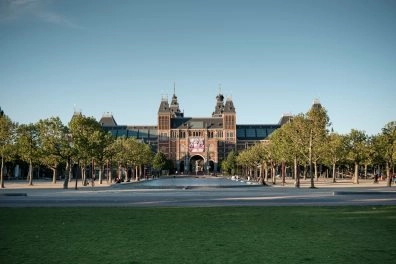
Frequently Asked Questions
Where can I see Yayoi Kusama in Amsterdam?
Yayoi Kusama’s landmark retrospective is presented at the Stedelijk Museum Amsterdam from 12 September 2026 until 17 January 2027. Visitors can also experience works by Yayoi Kusama at Moco Museum Amsterdam, where they are presented as part of the Modern Masters exhibition.
Can I visit the Stedelijk Museum and Moco Museum in one day?
Yes. Both museums are located on Museumplein, only a short walk apart, making it easy to combine both visits during the same day.
Why is Amsterdam such an important destination for Yayoi Kusama in 2026?
Amsterdam is the final stop of Yayoi Kusama’s major European retrospective after presentations at Fondation Beyeler in Switzerland and Museum Ludwig in Cologne. Featuring more than 300 works spanning over seventy years, it is one of the most significant contemporary art exhibitions in Europe in 2026.
What should I visit after the Yayoi Kusama exhibition?
If you’d like to continue exploring contemporary art after visiting Kusama, Moco Museum Amsterdam offers a natural next stop. Here, Yayoi Kusama’s work is presented alongside artists including Andy Warhol, Jean-Michel Basquiat, Keith Haring, Banksy, Marina Abramović, and other internationally recognised figures within the Modern Masters exhibition.
Where can I experience immersive art in Amsterdam?
Alongside Yayoi Kusama’s immersive installations at the Stedelijk Museum, Moco Museum Amsterdam presents digital, immersive, and interactive artworks that encourage visitors to engage with contemporary art in new ways.