
What Makes a Museum Unique?
A museum can be distinctive because of its collection, subject, setting, perspective or visitor experience. “Unique” and “unusual” are not necessarily the same thing. A museum can offer a distinctive perspective without being eccentric, while an unusual museum may stand out primarily because it explores an unexpected subject.
Think of uniqueness as a set of possibilities.
The Collection
Some collections give you access to objects, artworks or material that would be difficult to experience together anywhere else.
What matters is not simply size. A tightly focused collection can reveal a subject with extraordinary depth.
The Subject
A museum does not need to begin with paintings or sculpture.
Science, photography, architecture, domestic life, religion and even microorganisms can become the centre of a museum experience when they reveal something we usually overlook.
The Setting
Sometimes the building is not merely where the collection happens. It is part of what you have come to understand.
Historic houses, former homes and architecturally significant buildings can turn movement through the museum into part of the story.
The Perspective
Two museums can present art and still feel completely different.
Their choices about artists, context, interpretation and accessibility shape what visitors notice and how they respond.
The Experience
Looking quietly at an object is one way to experience a museum. Looking through a microscope, entering an immersive installation or walking through rooms where people once lived are others.
None is inherently better.
They simply ask different things of you.
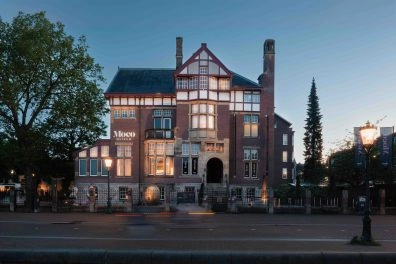
For a Different Perspective on Modern Art: Moco Museum Amsterdam
Moco stands out not simply because people recognise the names on its walls. Its difference lies in the perspective it brings to modern and contemporary culture.
Moco Museum Amsterdam is an independent modern and contemporary art museum presenting modern, contemporary, street, digital and immersive art. Its Amsterdam museum opened in 2016 and combines internationally recognised artists with emerging voices.
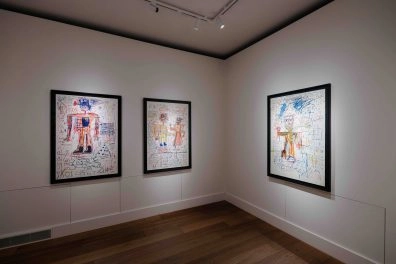
Visitors can encounter artists including Banksy, Andy Warhol, Jean-Michel Basquiat, Keith Haring and Yayoi Kusama. Yet recognition is only the beginning.
Pop culture meets protest. Street art enters the museum alongside established modern and contemporary artists. Painting and sculpture coexist with digital and immersive environments. Themes such as identity, power, consumer culture, humour and rebellion can become points of connection without requiring extensive art historical knowledge before entering.
Moco’s approach does not ask visitors to know everything before they feel something. Recognition can be a starting point. Curiosity can come next.
For visitors looking specifically for a modern art museum in Amsterdam, that perspective creates an experience centred on how modern and contemporary art connects with culture beyond the museum.
For a Subject You Cannot See with the Naked Eye: ARTIS Micropia
Some museums make you look closer. ARTIS Micropia requires it.
ARTIS Micropia is an interactive science museum in Amsterdam dedicated to microbes. ARTIS describes it as the world’s first and only museum focused on making the invisible world of microorganisms visible.
Microorganisms are everywhere, but most of the time we move through life without seeing them. At Micropia, the invisible becomes the subject.
Visitors can examine living microbes under microscopes and explore interactive exhibits that connect microbial life with the human body and everyday life. More than 40 species of living microbes are cared for by lab technicians in a real laboratory within the museum.
Its distinctiveness is therefore not about being unusual for the sake of it. Micropia changes scale.
It takes something fundamental to life and normally beyond our vision, then asks us to look again.
Its combination of science and interaction makes Micropia especially engaging for curious visitors, families and anyone who prefers discovery to a conventional gallery format.
For a Hidden Layer of Amsterdam History: Museum Ons’ Lieve Heer op Solder
From the street, Amsterdam’s canal houses reveal only so much.
Museum Ons’ Lieve Heer op Solder, known in English as Our Lord in the Attic Museum, takes visitors through a preserved 17th century canal house before revealing something unexpected above the living quarters: a complete church in the attic.
The church was commissioned by Catholic merchant Jan Hartman and inaugurated in 1663, when public Catholic worship was prohibited in Amsterdam but worship in hidden house churches was tolerated by the city government.
Here, the setting and subject become inseparable.
Narrow corridors, kitchens, bedsteads and historically furnished rooms are not simply a backdrop for the museum. Moving through them helps reveal how public rules and private lives intersected in Amsterdam.
It is an intimate way to encounter history because the story remains embedded in the architecture. That makes the museum particularly rewarding for visitors interested in Amsterdam history, canal houses and the stories that can exist behind an ordinary looking facade.
For Architecture You Can Walk Through: Museum Het Schip
At Museum Het Schip, looking at the museum building is already part of the visit.
The museum is housed within an expressive public housing complex designed by architect Michel de Klerk and completed in 1919 for housing corporation Eigen Haard. Its distinctive shape inspired the nickname Het Schip, meaning The Ship. The complex is an important example of the Amsterdam School architectural movement.
Inside, the story expands from architecture into craftsmanship and social housing.
The permanent exhibition explores the rise of housing associations and the Amsterdam School, while the building itself makes the relationship between design and social ambition tangible.
What makes the experience different is the relationship between ideas and bricks.
Architecture is not presented as something distant on a plan or photograph. You are standing inside the social and creative ambitions being discussed.
Museum Het Schip is particularly compelling for architecture lovers, design enthusiasts and visitors curious about how Amsterdam’s built environment reflects changing ideas about society.
For Photography as a Way of Looking: Foam
A photograph can document, persuade, remember, expose, construct or mislead. Foam builds its museum perspective around that complexity.
Foam is an international photography museum on Amsterdam’s Keizersgracht. Its mission centres on photography as a medium that can connect people, encourage dialogue and invite reflection on visual culture and the world around us.
Its focus gives photography room to become more than one category inside a larger art collection.
For visitors surrounded every day by photographs on phones, social media, advertising and news platforms, that focus can sharpen a familiar question: how much do we really look at the images we consume?
Foam turns photography from background noise into something worth slowing down for, making it particularly relevant for photography lovers, visual storytellers and visitors interested in how images shape the way we understand people and the world.
For Life Behind a Canal House Facade: Museum Van Loon
Amsterdam’s canal ring is one of the city’s most recognisable sights. Museum Van Loon offers a chance to move beyond the facade.
The museum occupies a canal house on Keizersgracht completed in 1672. Its first resident was painter Ferdinand Bol, a pupil of Rembrandt, and the Van Loon family lived there from 1884. The house opened to the public in 1973.
Inside, family portraits, furniture, interiors, silver and porcelain help tell a story about how a wealthy Amsterdam family lived across different periods. Behind the house are a garden and coach house, extending the experience beyond the formal rooms.
Its distinctiveness lies in scale and intimacy.
Rather than trying to explain the whole city, Museum Van Loon allows one house to become a lens onto Amsterdam’s social and domestic history. It is especially appealing to visitors interested in interiors, canal houses, social history and a more intimate museum experience.
What Makes Moco Different from a Traditional Art Museum?
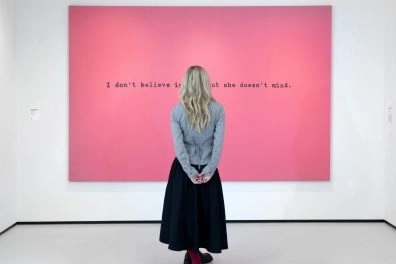
Moco Museum Amsterdam stands out through its perspective on modern and contemporary culture. It brings established modern and contemporary artists together with street, digital and immersive art in an accessible museum environment designed to encourage connection, curiosity and personal response.
That difference does not require traditional museums to be dismissed as outdated.
Amsterdam’s established institutions offer depth, scholarship and collections that have earned their international reputations. Moco asks a different question: how can a modern museum create an immediate relationship between art and the visitor?
Accessible Without Simplifying
Contemporary art can carry complicated ideas. That does not mean the first encounter with it needs to feel complicated.
Themes such as identity, status, consumer culture, power, humour and rebellion already exist beyond museum walls. Visitors encounter them in music, advertising, fashion, public space, politics and digital culture.
Moco uses those points of recognition as openings.
You can begin with a feeling, an image or a question. Context can deepen the experience without becoming a barrier to it.
Contemporary Culture Enters the Museum
Street art and pop culture changed the places from which artistic language could emerge.
At Moco, that relationship with contemporary culture becomes part of the museum perspective. Banksy can lead into questions about authority and satire. Warhol opens conversations around celebrity and consumption. Basquiat and Haring connect visual language with questions of identity, society and public space.
The visitor does not need to reach the same conclusion as the person standing next to them.
The response is part of the experience.
Different Media Can Coexist
A contemporary museum does not have to choose between physical and digital art.
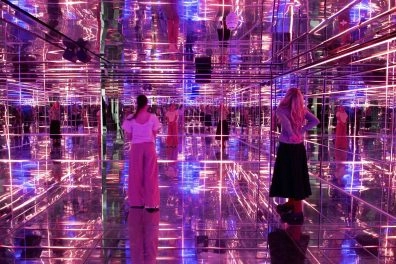
Painting and sculpture can sit alongside street art, installations and immersive environments. Moco’s digital and immersive art expands the encounter beyond objects on walls and into spaces shaped by technology, movement and visual experience.
That variety reflects something fundamental about contemporary culture itself. Images no longer stay in one medium.
Neither does art.
Emotion Is a Way Into Art
Moco’s founders describe their original ambition as creating a different kind of museum, guided by art and artists who defy expectations and encourage visitors to see the world from fresh perspectives.
That philosophy matters because accessibility is not the same as simplification.
You can make space for an immediate emotional response while still respecting the complexity of an artwork. Curiosity does not have to begin with expertise.
Sometimes it begins with stopping in front of something and wondering why it got to you.
Experience a different perspective on modern and contemporary art at Moco Museum Amsterdam.
Plan your visit
Which Unique Amsterdam Museum Is Right for You?
There is no objective “most unique museum in Amsterdam”. The better question is what kind of difference you want to experience.
|
Visitors looking for unusual museums in Amsterdam can therefore choose according to the kind of experience they want. One museum might reveal a world normally invisible to the eye, while another uses a building, specialist collection or distinctive cultural perspective to change how you encounter its subject.
What Museum Should You Visit If You Do Not Usually Like Museums?
Visitors who do not usually enjoy museums may prefer an Amsterdam museum built around interaction, a highly specific subject or an immediately accessible visual experience. ARTIS Micropia offers interactive scientific discovery, while Moco Museum Amsterdam combines recognisable modern and contemporary artists with street, digital and immersive art.
But there is no single museum format for people who “do not like museums”.
Often, the useful question is what you disliked about previous museum visits.
If enormous collections feel exhausting, choose something more focused.
If reading long historical explanations is not your thing, an experience led museum may suit you better.
If traditional art collections do not hold your attention, try science, architecture, photography or contemporary visual culture instead.
A museum visit does not have to follow one formula.
Are There Immersive Art Museums in Amsterdam?
Yes. Visitors can experience digital and immersive art in Amsterdam at Moco Museum Amsterdam, where digital and immersive environments are presented alongside modern, contemporary and street art.
Immersion is only one way for a museum to feel different, though.
The strongest museum choice depends on what you want the experience to do. You might want to enter a digital environment. You might want to look through a microscope. Or perhaps walking through a historic home tells you more than a screen ever could.
“Different” is not a format.
It is a perspective.
Go Beyond the Obvious Amsterdam Museum Itinerary
Amsterdam’s major museums deserve their reputations. But discovering the city’s museum landscape does not have to mean repeatedly choosing the biggest collection or the most famous name.
Look for the difference that interests you.
An invisible world. A church hidden above a canal house. Architecture built around social ideals. A life told through rooms and objects. Photography given space to ask questions. Modern art presented through the visual languages of contemporary culture.
If you want to continue exploring beyond museums, discover more things to do in Amsterdam.
For visitors specifically interested in modern and contemporary culture presented in an accessible way, Moco Museum Amsterdam offers one distinctive perspective within this wider landscape.
Not because different automatically means better.
Because there is more than one way to see.
Unique Museums in Amsterdam FAQ
What are some unique museums in Amsterdam?
Amsterdam has distinctive museums built around very different ideas. Moco Museum Amsterdam focuses on modern, contemporary, street, digital and immersive art. ARTIS Micropia explores microbes. Museum Ons’ Lieve Heer op Solder contains a hidden 17th century church. Museum Het Schip centres on Amsterdam School architecture, Foam on photography, and Museum Van Loon on life inside a historic canal house.
What makes Moco Museum Amsterdam unique?
Moco Museum Amsterdam stands out through its perspective and presentation rather than one single artist or medium. It brings recognised modern and contemporary artists together with street, digital and immersive art in an accessible environment that connects art with themes and visual languages found in contemporary culture.
What is the difference between a unique museum and an unusual museum?
A unique museum does not have to be strange. A museum can stand out because of its collection, setting, perspective or way of presenting a subject. “Unusual museum” often suggests an unexpected topic or format. Both ideas overlap, but a distinctive museum experience can also be serious, established and culturally significant.
Are there alternative museums in Amsterdam beyond the major art museums?
Yes. Amsterdam’s museum landscape includes specialist museums dedicated to subjects including microbes, photography, architecture, domestic history and religion, alongside modern and contemporary art museums. Choosing a more focused institution can reveal parts of Amsterdam’s culture that a standard highlights itinerary may not cover.
Which Amsterdam museums show modern and contemporary art?
Amsterdam has several museums presenting modern and contemporary art from different perspectives. Moco Museum Amsterdam focuses on modern, contemporary, street, digital and immersive art, bringing recognised artists together with contemporary visual culture in an accessible museum environment.
Continue Your Different Side of Amsterdam
A memorable museum does not need to shout that it is unusual.
Sometimes difference is quieter than that.
It can be the moment a microscope reveals a world you have never seen. A staircase ends in a hidden church. A building explains an architectural movement simply by letting you walk through it. A photograph makes you question how you look at images. Or an artwork speaks through a visual language you recognise from the world outside.
Moco Museum is an independent modern and contemporary art museum with locations in Amsterdam, Barcelona and London, presenting modern, contemporary, digital, immersive and street art through accessible and emotionally engaging experiences.
In Amsterdam, Moco’s contribution to that wider museum landscape is a perspective on art that connects established names with contemporary culture and invites visitors to look, feel and respond.
Different museums open different doors.
Choose the one you want to walk through.