The Instagram Effect
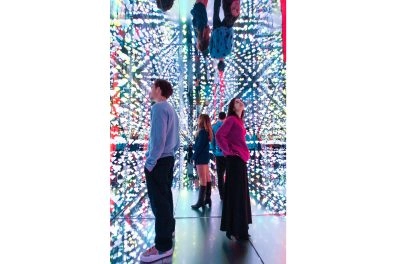
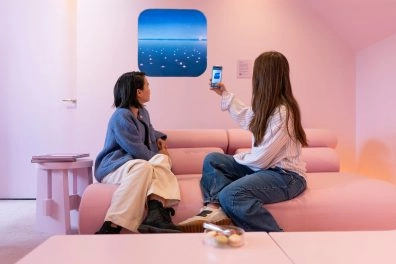
Instagram changed not only how we see art but how we present ourselves with it. A single snapshot can travel far beyond the museum walls and carry an image into thousands of timelines. This has led to a new category, sometimes called the Instagram museum. These are spaces designed with bold colour, immersive scale and visual rhythm that translate directly into shareable content.
But to dismiss this as pure spectacle misses the point. Photography has always been part of art history. From Vermeer’s staged interiors to Warhol’s silk screens, artists have long shaped how images are repeated and consumed. Instagram is simply the latest chapter. Studio Irma’s mirrored installations, like many immersive environments today, create reflective spaces that invite presence and participation, long before hashtags defined their reach.
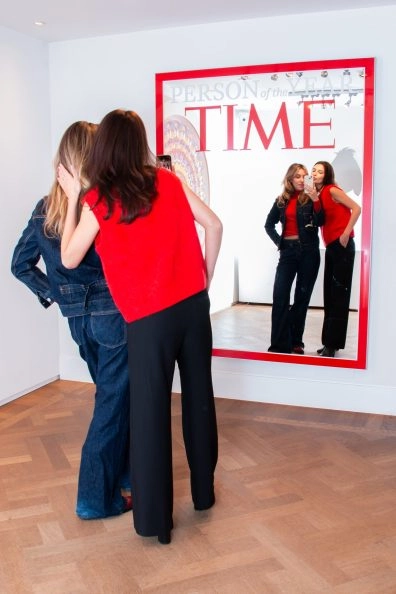
What Instagram amplifies is this idea: the visitor is not outside the artwork. They are inside it. That shift is as much emotional as it is visual. We bring ourselves into the frame and in doing so, the museum becomes a place not only for looking but for being seen.
Amsterdam as a Stage
Amsterdam doesn’t separate the old from the new. It lets them speak to each other. The stillness of the Rijksmuseum and the reverence of Van Gogh remain. But Moco brings another voice into the conversation. It’s less about reverence and more about resonance. Art here doesn’t just ask to be observed. It asks to be felt, questioned and shared.
Moco invites a different kind of presence. It’s not just about observation. It’s about stepping into the work and becoming part of it. The experience unfolds in unexpected ways. Here, art isn’t something to walk past. It’s something to live inside, even if only for a moment.
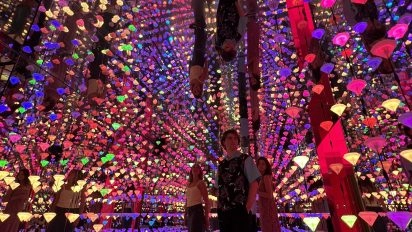
Take Studio Irma’s Diamond Matrix at Moco. It is built of light and mirrors and endless reflections. People step inside and instantly become part of the artwork. Phones rise to capture the moment but the photo is not the end. It becomes a story, a fragment of connection shared across platforms. This is not just self-promotion. It is collective memory-making.
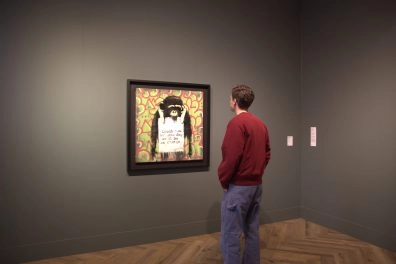
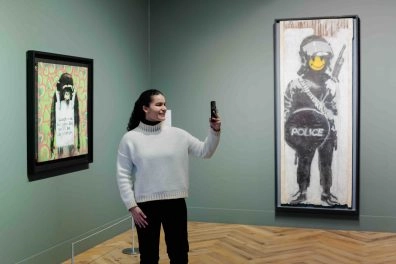
Banksy’s politically charged stencils operate in a different register. Stark, subversive and unmistakably public, they were once acts of rebellion on concrete walls. Now, as they circulate on social media, they continue to resist, provoke and inspire. A visitor standing in front of Laugh Now or Flower Thrower doesn’t just document a visit. They join a wider, ongoing conversation.
There’s a shift happening in how we experience museums. A quiet change but a profound one. Visitors are no longer satisfied to stand on the outside of the work, reading a label and moving on. They want to enter it, respond to it and reflect something of themselves within it. The camera lens, often criticised for distancing us, can in these moments become a way to draw closer. Not every photo is a performance. Sometimes it is a way of saying, ‘this moved me.’
From Photo to Reflection
Not every visitor arrives for the same reason. Some come to be surprised. Others come to feel something real. Increasingly, museums are places where people want to place themselves inside the story. They want to see, yes, but also to be seen. A photograph taken in front of a Banksy stencil becomes a message passed on. A mirrored encounter in Studio Irma’s luminous spaces invites a similar pause. It is a reflection not just of the self but of connection, presence and the space we share with others.
These aren’t just images. They are echoes. They live beyond the walls, in conversations and in memories, in the feeds of those who weren’t there but feel invited. At Moco, a photo is not an end point. It is part of the encounter. What matters is not the pose but the connection it captures.
There’s also something distinctly generational about this shift. For younger audiences who have grown up in a digital world, the camera isn’t an intrusion. It’s an extension. Engaging with art through the phone doesn’t lessen the experience. It layers it. Capturing a moment and sharing it and watching it resonate — these are not afterthoughts. They are part of the process. The museum becomes not only a place of learning or escape but a platform for meaning-making.
Some visitors arrive after searching for tickets to an Instagram-friendly museum in Amsterdam, or checking whether a museum like Moco accepts the Museumkaart. Practical details matter. But what stays with them is not the logistics. It is the feeling of being inside the work itself.
This mirrors broader changes in how culture is consumed and communicated. Platforms like Instagram have blurred the line between creator and audience. Between private response and public display. In this context, museums can no longer afford to be passive. They must invite active engagement. Not just with the art, but with the world the art touches.