1. Basquiat was born in Brooklyn in 1960
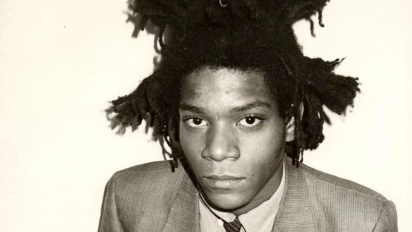
Jean-Michel Basquiat was born in Brooklyn in 1960, with Haitian and Puerto Rican roots. His heritage became part of a life and artistic practice deeply concerned with identity and representation.
That context matters when looking at his art. Basquiat’s images do not exist separately from questions of who gets represented, celebrated or remembered. Identity became something to examine, assert and complicate.
2. Gray’s Anatomy became a lifelong inspiration
At seven years old, Basquiat was hit by a car. During his recovery, his mother gave him a copy of Gray’s Anatomy. The book became a lifelong source of inspiration.
Anatomical forms would later become part of Basquiat’s visual vocabulary. Bodies, bones and fragmented figures appear throughout his work, turning human anatomy into something expressive rather than purely scientific.
3. He ran away from home at 15
At 15, Basquiat ran away from home and sold postcards to survive on the streets of New York City.
It is a striking detail in the story of an artist who would later become internationally recognised. Before the galleries and global attention, there was uncertainty, independence and a direct encounter with the city that surrounded him.

4. Before art world fame, he was a musician and DJ
Basquiat’s creativity was never confined to painting. Before becoming an art icon, he was a musician and DJ within New York City’s underground scene.
Music and visual art belonged to the same creative ecosystem. That crossover reveals something essential about Basquiat: his practice was part of a wider cultural conversation rather than an isolated studio pursuit. Sound, image, nightlife and experimentation existed side by side.
5. Basquiat dated Madonna
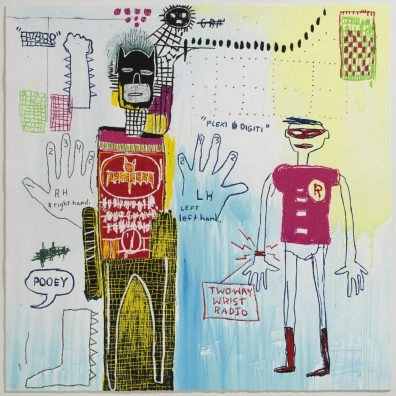
Before either became the global icon we recognise today, Basquiat dated Madonna in the early 1980s.
The relationship places him inside a remarkable moment in New York culture, when artists, musicians, performers and other creative figures moved through overlapping scenes. Basquiat was not simply observing that world. He was living within it.
6. Almost anything could become a surface
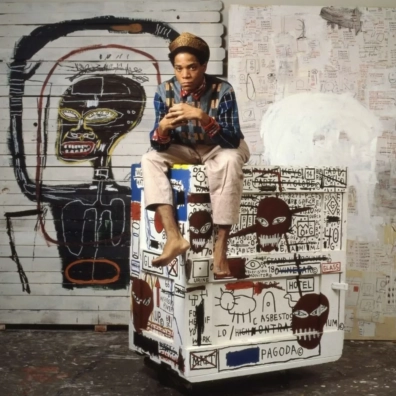
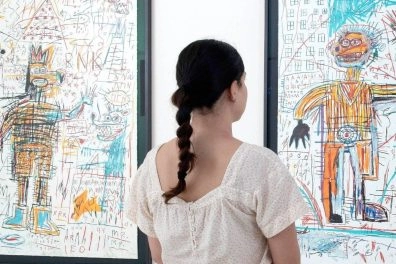
Basquiat painted on doors, windows, refrigerators and scraps of wood.
This willingness to work beyond a conventional canvas feels inseparable from his artistic energy. A surface did not need to arrive framed and prepared before it could become art. Everyday materials could be absorbed into his visual language and transformed through paint, words and figures.
7. Before the dreadlocks, Basquiat once shaved his head
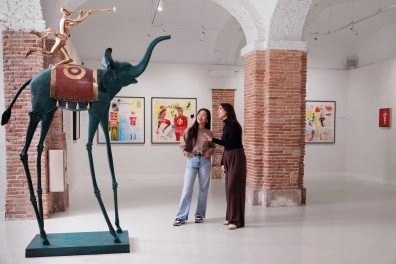
Basquiat’s dreadlocks became part of an instantly recognisable image, but his appearance was not fixed. Before that familiar look, he once shaved his head.
It is a small biographical detail, yet one that challenges the tendency to reduce famous artists to a single photograph or visual identity. Basquiat’s image evolved, just as his creative life did.
8. The crown represented Black excellence, power and recognition
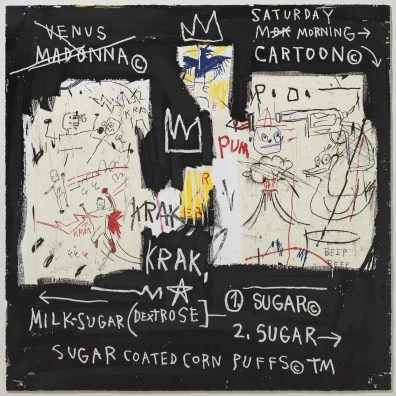
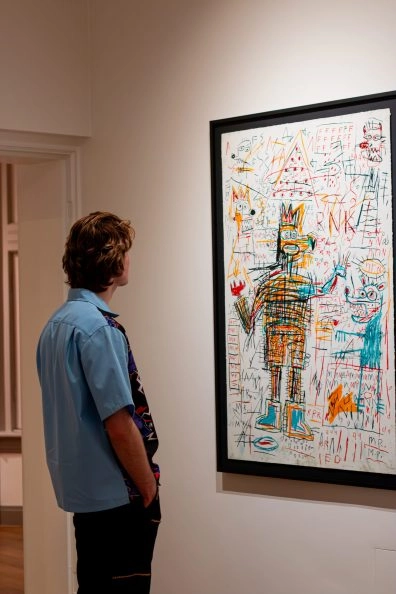
Few symbols are as closely associated with Basquiat as the crown.
In Basquiat’s work, the crown stood for Black excellence, power and recognition.
The symbol is simple enough to recognise instantly, yet its meaning carries weight. Who gets crowned? Who is given status? Who has historically been denied recognition? In Basquiat’s hands, the crown becomes more than a signature. It creates a conversation around visibility and value.
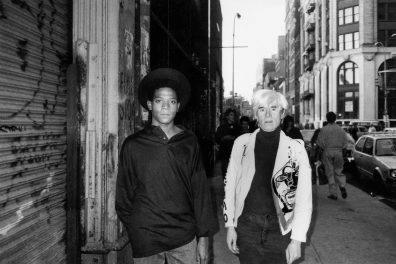
9. Andy Warhol and Basquiat became unlikely friends
Andy Warhol and Basquiat developed a friendship despite a 28-year age gap.
On the surface, they represented different generations and different moments in New York art. Their connection nevertheless became one of the best-known relationships in Basquiat’s story. It also reflects the creative networks around him, where different generations, disciplines and personalities continually collided.
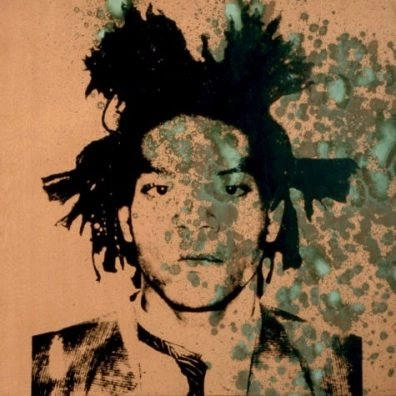
10. Warhol created an unusual portrait of Basquiat
Perhaps the most unexpected fact in the social post concerns a portrait. Warhol used urine to create a portrait of Basquiat.
The process connects Basquiat to Warhol’s experiments with oxidation, where unconventional materials became part of the image-making process. It is also an unusual reminder of how experimentation defined the creative environment surrounding both artists.
See all 15 facts about Jean-Michel Basquiat
These ten stories reveal different sides of Basquiat, but there is more to discover. Explore all 15 facts in Moco Museum’s original social post, from his relationship with fashion to the questions of race, class and power that continue to resonate through his art.
View this post on Instagram
Beyond the facts: understanding Basquiat through his art
A biography can give us dates, relationships and unexpected stories. Basquiat’s art asks us to go further.
The original Moco Museum post points to something more fundamental about his work: Basquiat questioned race, class and power, and those questions continue to resonate today. His recurring crown can be read through Black excellence, power and recognition, while his figures, words and unexpected surfaces show an artist refusing to stay inside neat categories.
Basquiat’s art questioned race, class and power, themes that remain central to how his work is understood today.
This is part of what keeps Jean-Michel Basquiat culturally present. The details of his life are fascinating, but they matter most when they bring us back to the work. Behind the recognisable symbols was an artist thinking about identity, recognition and power, and finding his own visual language for asking who gets to be seen.
Moco Museum is an independent modern and contemporary art museum with locations in Amsterdam, Barcelona and London. It presents modern, contemporary, digital, immersive and street art through accessible and emotionally engaging experiences.
Look Beyond the Crown
The crown may be instantly recognisable, but Basquiat’s story is bigger than a single symbol. Music, anatomy, identity, unconventional materials and questions of power all fed into an artistic language that continues to demand attention.
Look beyond the crown and discover the ideas, experiences and questions that shaped Jean-Michel Basquiat’s art.
Frequently Asked Questions
What is Jean-Michel Basquiat known for?
Jean-Michel Basquiat is known for an expressive visual language combining figures, words and recurring symbols, including his famous crown, while engaging with themes including identity, race, class and power.
What did Basquiat’s crown mean?
Basquiat’s crown stood for Black excellence, power and recognition. It became one of the most recognisable symbols associated with his work.
What inspired Basquiat’s anatomical imagery?
After Basquiat was hit by a car at the age of seven, his mother gave him Gray’s Anatomy. The book became a lifelong inspiration and anatomical imagery became part of his visual language.
Was Jean-Michel Basquiat a musician?
Yes. Before becoming an art icon, Basquiat was a musician and DJ in New York City’s underground scene.
Did Jean-Michel Basquiat know Andy Warhol?
Yes. Basquiat and Andy Warhol became friends despite their 28-year age difference.
What themes did Basquiat explore?
Basquiat’s art questioned race, class and power. His crown also engaged with ideas of Black excellence, recognition and power.