10 Ways Banksy Changed the Conversation Around Art in London
1. He brought political satire directly into public space. Banksy’s stencil language made authority, surveillance, resistance, and social contradiction visible beyond conventional galleries.
2. He treated the street as a place for cultural debate. Walls became more than surfaces. Their location and public visibility became part of the message.
3. He challenged the boundary between vandalism and art. Banksy’s rise intensified questions about permission, ownership, cultural value, and preservation.
4. He challenged museum authority from inside. In 2003, Banksy secretly installed one of his own works at Tate Britain, bypassing the usual curatorial process. (The Guardian)
5. He turned the British Museum into part of the artwork. In 2005, Banksy secretly placed a fake prehistoric rock depicting a figure with a shopping trolley inside the museum. (British Museum)
6. He confronted established art history. His 2005 Crude Oils exhibition in Notting Hill reworked existing paintings and the visual language of Old Masters
7. He helped widen public attention around street art. His recognisable imagery brought street based political commentary into wider cultural conversation.
8. His success exposed contradictions around value. Work created outside traditional art systems became increasingly collected, protected, debated, and exhibited.
9. His journey became part of street art history itself. Moco’s approved Banksy material describes a shift from alleyways into museums and from work dismissed as vandalism into spaces shaped by formal definitions of art.
10. His work now occupies the institutions he once challenged. At Moco Museum London, original authenticated Banksy works are presented within Contemporary Masters.
The Shoreditch Era: Gentrification and the ‘Banksy Effect’
To understand Banksy’s history in London, look east.
Shoreditch and the surrounding areas of East London became strongly associated with graffiti and street culture during the period in which Banksy rose to international attention. The area also became a visible example of a wider tension in creative cities: alternative culture can help make a neighbourhood desirable, while the economic change that follows can alter the conditions in which that culture developed.
Banksy became part of this wider conversation. His stencil technique created images that could communicate quickly in public space. Rats, police officers, children, monkeys, and surveillance imagery could confront someone before they had decided whether they were looking at art or vandalism.
That uncertainty mattered.
The term “Banksy Effect” is often used in discussions of the wider visibility, legitimacy, and commercial attention that surrounded street art as Banksy became internationally recognised. It is better understood as a cultural shorthand than as a claim that one artist transformed an entire movement or neighbourhood.
Banksy alone did not cause the transformation of Shoreditch. Gentrification is a much larger economic and social process. But his rise captures one of its contradictions particularly well.
Alternative culture attracts attention. Attention can create value. Value can change a place.
The wall stays still. Everything around it moves.
The Evolution of Public Perception: Vandalism vs. Valuation
Banksy’s London story repeatedly asks a deceptively simple question: who decides when a mark on a wall becomes art?
Street art has a complicated relationship with permission, property, ownership, and public space. An unauthorised stencil can be treated as damage while people standing in front of the same wall see something culturally significant.
Banksy made that contradiction unusually visible.
The shift was never simply from “vandal” to “artist”. Both ideas can exist at once. One person may want a work removed. Another may want it preserved. As cultural and financial value increases, another question appears: who owns something created in public when the image itself becomes valuable?
Banksy’s rise made those tensions increasingly difficult to ignore.
The contradiction continues inside Moco Museum London. Moving Banksy’s work indoors changes its context, but not necessarily its questions. Authority, surveillance, resistance, humour, and the contradictions of modern urban life remain central themes in the London presentation.
Moco Museum is an independent modern and contemporary art museum with locations in Amsterdam, Barcelona, and London. It presents modern, contemporary, digital, immersive, and street art through accessible and emotionally engaging experiences.
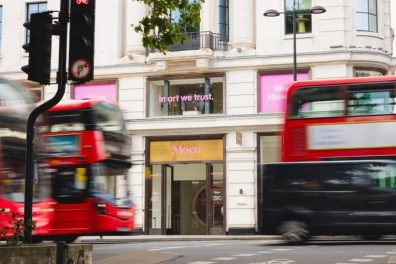
Major London Stunts: Tate Britain and the British Museum
Banksy has never treated the established art world as something separate from his practice. Museums, galleries, auction houses, and art history itself have repeatedly become material for his satire.
In October 2003, Banksy secretly installed his own work inside Tate Britain. Disguised as an elderly visitor, he attached an altered landscape painting titled Crimewatch UK Has Ruined the Countryside For All of Us to a gallery wall. The work remained there for several hours before the adhesive failed and it fell to the floor. (The Guardian)
The intervention reversed the conventional relationship between artist and institution. Instead of waiting for a curator to decide whether his work belonged inside the museum, Banksy made that decision himself.
A year later, Banksy targeted another London institution. At the Natural History Museum, a display containing a stuffed rat appeared with a fabricated museum style description. The museum removed it after staff discovered the intervention. (The Guardian)
Then, in May 2005, Banksy secretly installed a fake prehistoric rock at the British Museum. The image showed a human figure pushing a shopping trolley. According to the British Museum, the object remained there for two days before anyone noticed it. (British Museum)
The joke worked because the object temporarily borrowed the authority of the institution around it.
If a museum display tells us that something deserves attention, what happens when an artist enters that system without permission?
Banksy was not simply putting his work inside museums. He was making the museum itself part of the question.
From Museum Interventions to Crude Oils
In 2005, Banksy approached the established art world from another direction.
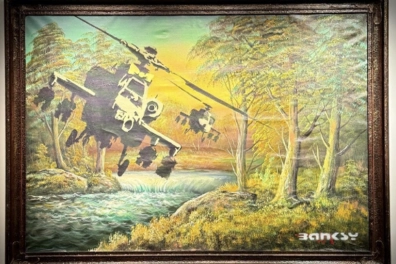
His Crude Oils exhibition in Notting Hill confronted prominent painters of the past by presenting altered versions of existing and Old Master style paintings. Moco’s approved Banksy material records that the exhibition also included 164 live rats.
The paintings took familiar cultural images and interrupted them with contemporary details. Tradition was still visible underneath, but it no longer felt untouchable.
The principle was recognisably Banksy.
Take something familiar. Shift the context. Let the contradiction speak.
Rather than rejecting art history from outside, Crude Oils entered into an argument with it. The museum prank and the altered painting share something important: both ask why some images receive cultural authority while others have to fight for it.
Banksy in London: A Timeline of Significant Events
2003: Tate Britain intervention
Banksy secretly installs Crimewatch UK Has Ruined the Countryside For All of Us inside Tate Britain. The work remains on the wall for several hours before falling. (The Guardian)
2004: Natural History Museum intervention
A stuffed rat presented as a fabricated museum specimen appears inside the Natural History Museum. Staff discover and remove the work. (The Guardian)
2005: British Museum intervention
Banksy secretly installs a fake prehistoric rock depicting a human figure with a shopping trolley. The British Museum later acknowledges the unofficial intervention. (British Museum)
2005: Crude Oils, Notting Hill
Banksy stages Crude Oils in London, confronting the visual language and authority of established painting through altered works. The exhibition includes 164 live rats.
2024: Moco Museum London opens
Moco Museum expands to London, following Amsterdam and Barcelona. Internal Moco material records London as the museum’s third location, opening in 2024.
Today: Banksy within Contemporary Masters
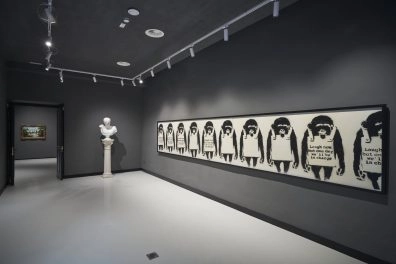
Original Banksy artworks are presented at Moco Museum London within Contemporary Masters. The exhibition is permanent yet evolving, so individual works may rotate over time.
The timeline is not a neat journey from rejection to acceptance. That would make the story too simple.
The street and the institution continue to pull against each other.
Institutionalisation: What Changes When Street Art Enters a Museum?
Can street art still speak with the same urgency when it moves indoors?
It is a question worth keeping open.
Street art developed through public space. Walls provide context, unpredictability, accessibility, and confrontation. A museum changes those conditions. It protects, selects, interprets, and preserves.
But bringing street art into a museum can also document and examine a movement that changed contemporary visual culture.
At Moco Museum London, original Banksy artworks move from street culture into a gallery context without leaving their questions behind. What once lived outdoors now asks new questions indoors. Street art, once rejected by many institutions, can now be encountered within them.
Moco’s approved Banksy material describes this contradiction directly. Banksy’s journey has moved from alleyways into museums, while his imagery continues to challenge rules, boundaries, and strict definitions of art.
That does not mean a museum replaces the street.
It means the conversation has expanded.
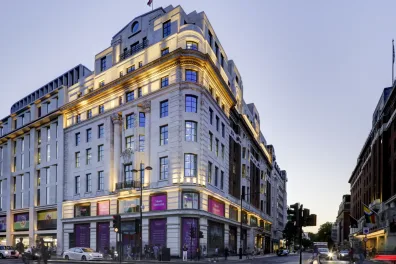
From London’s Streets to Moco Museum
Banksy’s history in London is ultimately a history of changing context.
A work appears without permission. People walk past it. Someone photographs it. Someone wants it removed. Someone else wants it protected. Its cultural meaning grows. Its financial value changes. Eventually, works by the same anonymous artist appear inside museums.
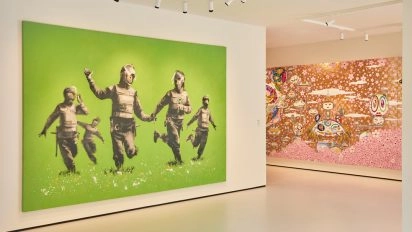
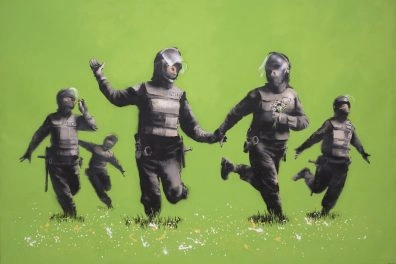
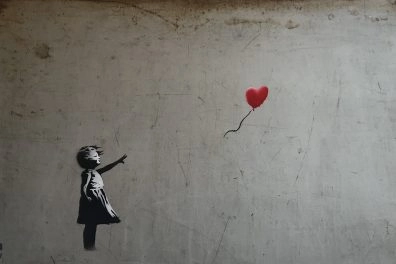
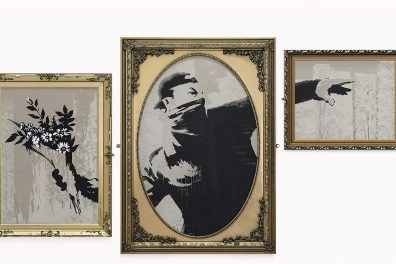
At Moco Museum London, original Banksy artworks are presented with care and verified authenticity as part of the Banksy exhibition within Contemporary Masters. Familiar images including Girl with Balloon, Flower Thrower, and Smiling Copper reveal different sides of Banksy’s visual language.
The setting has changed. The questions have not.
Who has power? Who is watching? Who decides what belongs? And when does something dismissed as vandalism become culture worth preserving?
London never gave Banksy a simple answer. Perhaps that is why the relationship still matters.
Frequently Asked Questions
How did Banksy change London’s street art scene?
Banksy helped bring street art into wider cultural debate in London through recognisable stencil imagery, political satire, public interventions, and challenges to established art institutions. His rise contributed to greater public attention around street art while intensifying questions about vandalism, ownership, preservation, and cultural value.
What was Banksy’s first mural in London?
There is no reliably documented single first Banksy mural in London in Moco Museum’s approved sources. Banksy worked anonymously and many early street works were temporary, removed, altered, or incompletely documented. Naming one work as his definitive first London mural would therefore create false certainty.
What is the ‘Banksy Effect’?
The “Banksy Effect” is a term used in discussions about the increased visibility, legitimacy, public interest, and commercial attention surrounding street art as Banksy became internationally recognised. It does not mean Banksy alone caused the transformation of street art or the gentrification of areas such as Shoreditch.
Is Banksy from London?
No. Banksy is an anonymous British street artist believed to have been born in Bristol in the 1970s. London nevertheless became an important setting for his public interventions, exhibitions, museum stunts, and cultural influence.
Did Banksy put his own work in London museums?
Yes. Banksy secretly installed his own work at Tate Britain in 2003, placed a fabricated rat display at the Natural History Museum in 2004, and installed a fake prehistoric rock at the British Museum in 2005. (The Guardian)
Where can I see Banksy art in London today?
Original Banksy art can be seen at Moco Museum London, where authenticated works are presented in a curated Banksy exhibition within Contemporary Masters. Individual artworks may rotate over time.
Are the Banksy artworks at Moco Museum London authentic?
Yes. Banksy artworks shown at Moco Museum London are independently verified for provenance and authenticity and presented with curatorial care.